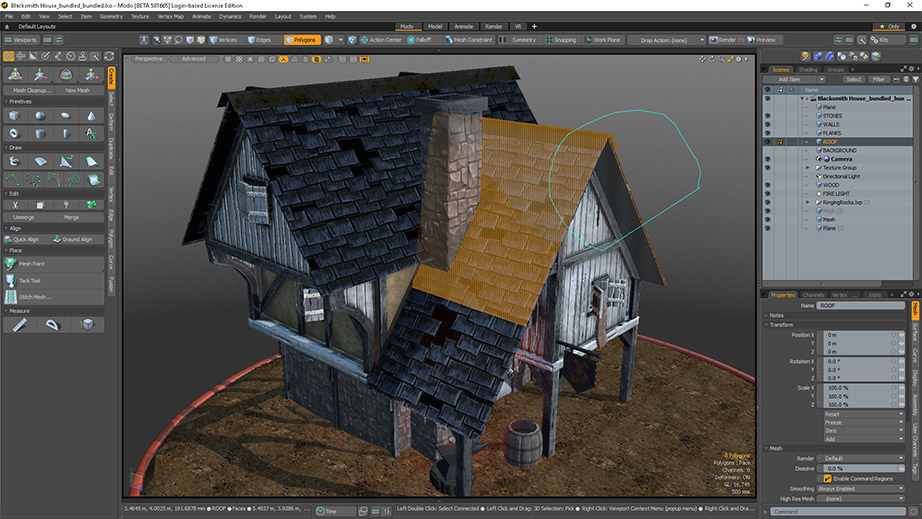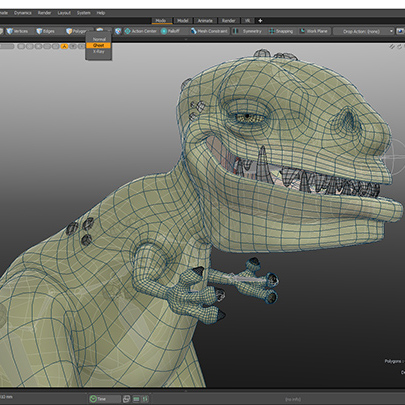
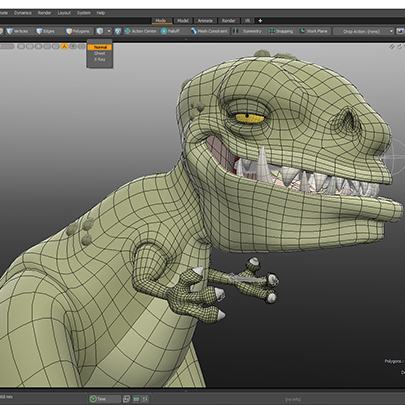
Ghost/Xray View Display
Whether you’re modeling or animating, coherent and customizable visualization of geometry is essential. Ghost and Xray viewport modes help you see what you need, when you need it, letting you stay in the creative flow.
Whether you’re modeling or animating, coherent and customizable visualization of geometry is essential. Ghost and Xray viewport modes help you see what you need, when you need it, letting you stay in the creative flow.
Changes are inevitable. This is always true when being directed. Add point allows you to revise existing details on your model by reducing the number of loops along a curve, providing a streamlined method of updating your models when those inevitable changes are thrown your way.
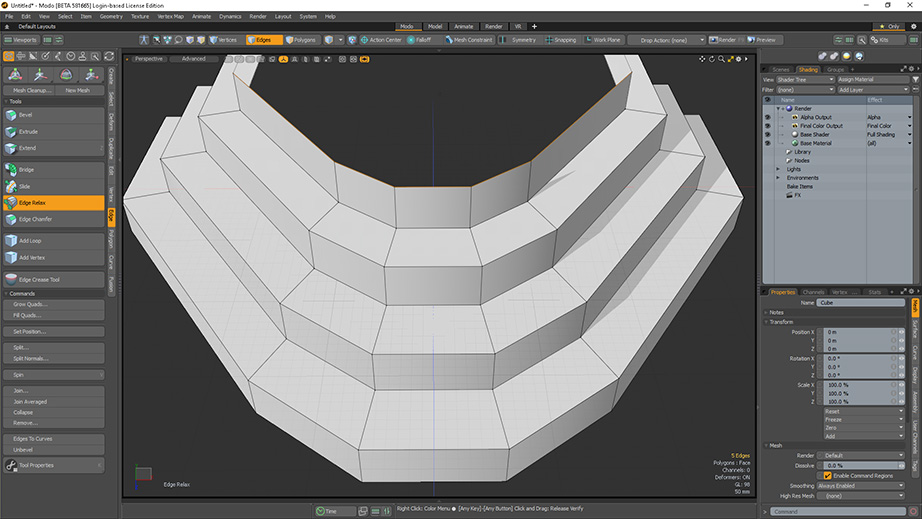
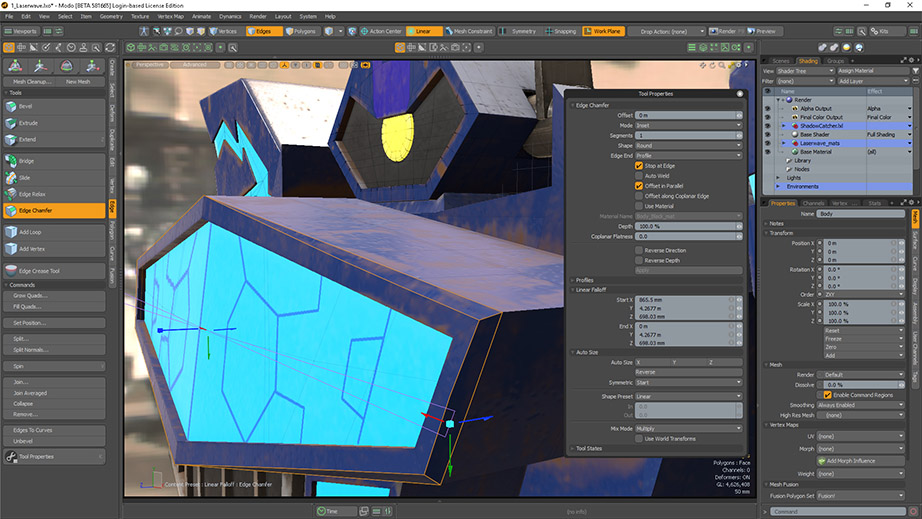
Edge Chamfer is the in-progress replacement for our edge bevel tools. In 14.0 we’ve taken further steps towards feature completion by adding falloff support for chamfer operations. Users can now exploit this modifier on our brand new tool.
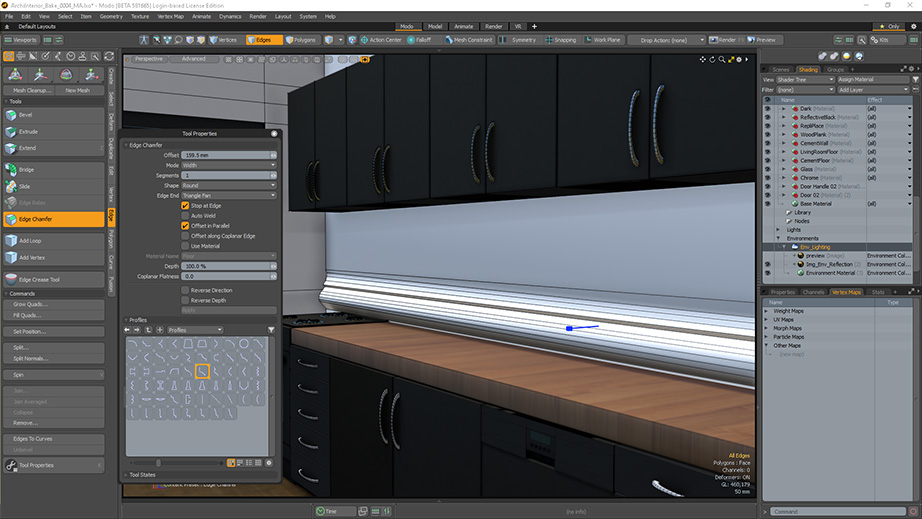
Profiles are an essential part of Modo’s modeling arsenal. Allowing you to quickly produce detailed forms along geometry loops, chamfer profiles brings us one step closer to a feature complete chamfer tool.
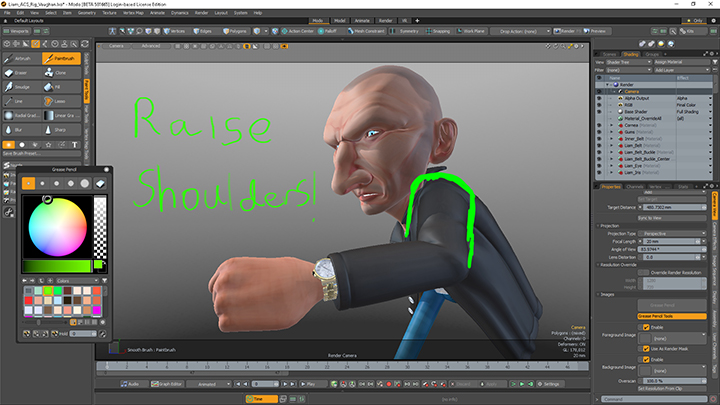
Art is communication. Quickly sketch notes or designs directly in the viewport, Whether it be on a single frame or across multiple, markup will help you communicate your ideas clearly.
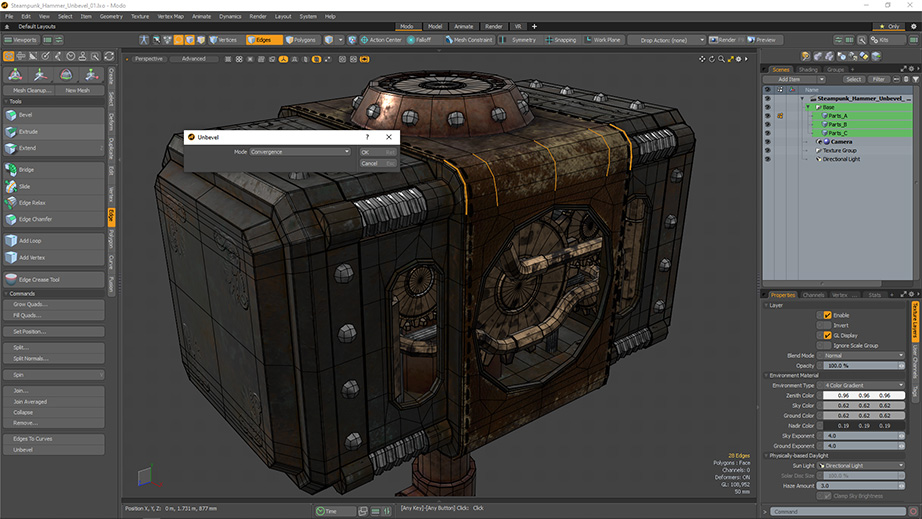
Every step in a modeling workflow can feel like a commitment. This is particularly true with edge bevels. Unbevel allows you to remove a bevel applied earlier, giving you the flexibility to iterate at late stages of a model or maybe just get home a little earlier.
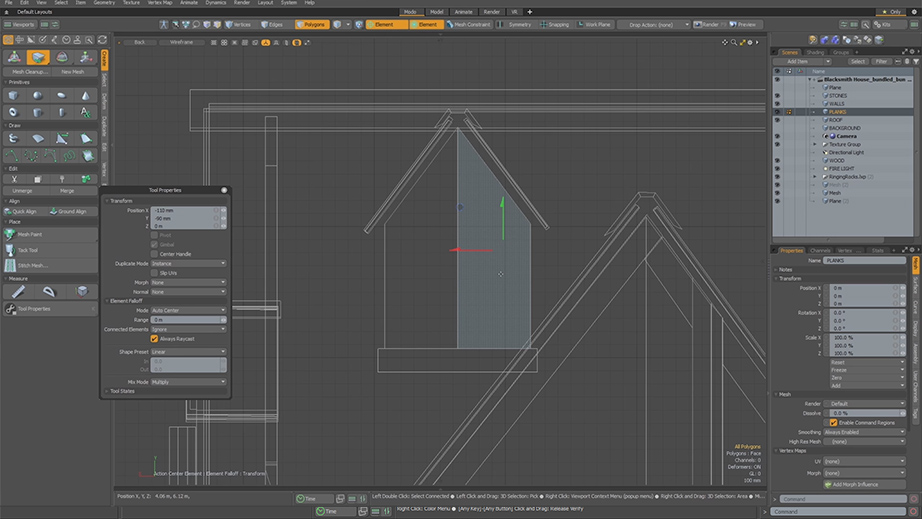
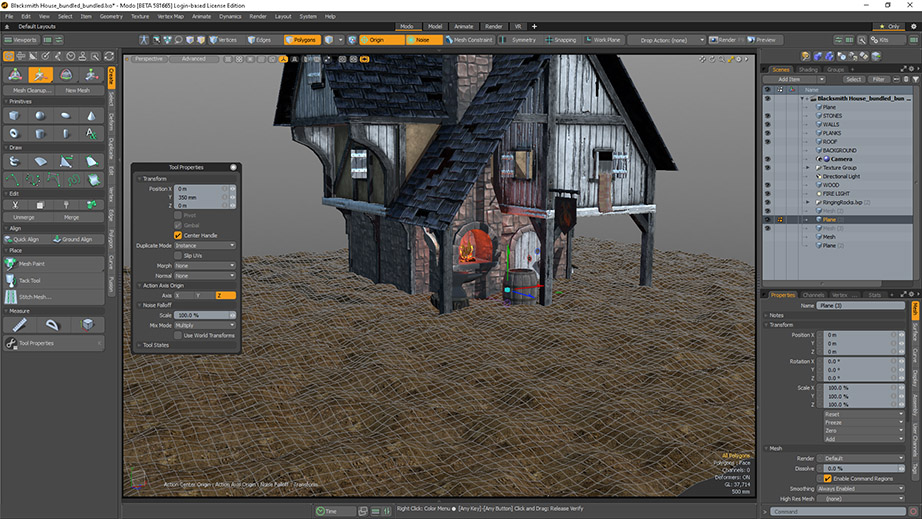
If an application lacks workflow consistency then the workflow is broken. Element Move Raycast allows you to select polygons while in wireframe mode, exactly as you would in shaded modes, letting artists further leverage muscle memory that is dependent on consistent behavior.
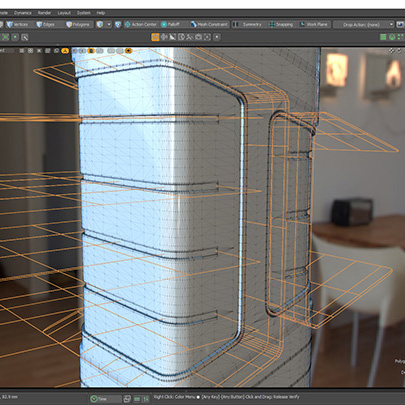
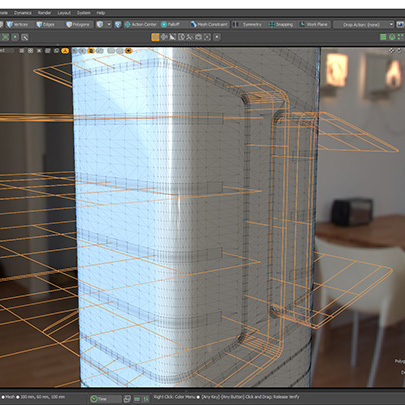
Producing fine, non-destructive details on surfaces has never been easier with the introduction of embossing for Mesh Fusion. Simply sketch curves or leverage curve-based text to project precise embossed designs on your model.
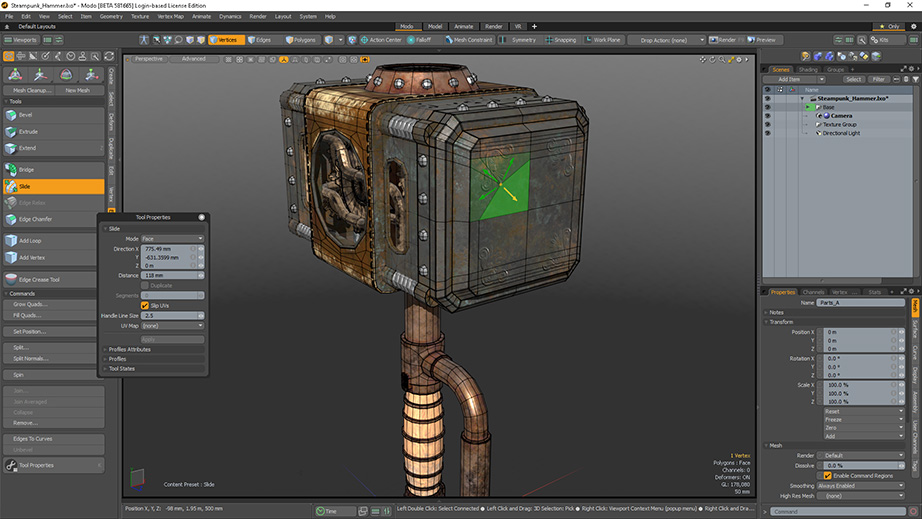
Modo is known for its innovative rapid modeling workflows. This innovation continues with Face Slide by giving you the ability to slide points over faces with easy-to-identify handles, furthering Modo’s modeling dominance.
Modo’s falloffs offered artists an easy way to customize their tools. By adding a world option, falloffs have been expanded to allow for consistent behavior across multiple mesh layers, fulfilling artist expectations.
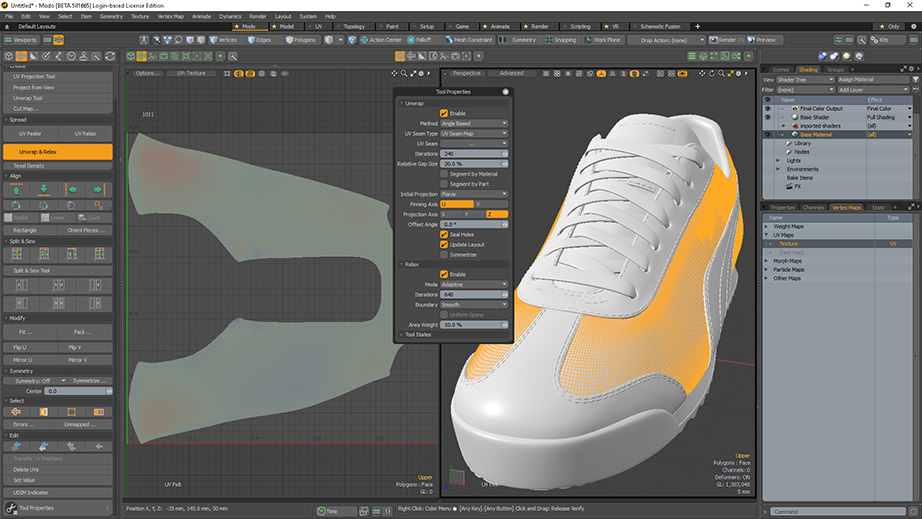
Modo has a tremendous library of tools that can streamline your asset creation workflows. However, when a series of tools are frequently used in a workflow, they should become one tool. Unwrap and Relax, ignore edge selection and eliminating auto activate for relax streamlines common UV workflows letting you produce complex and beautiful maps with ease.
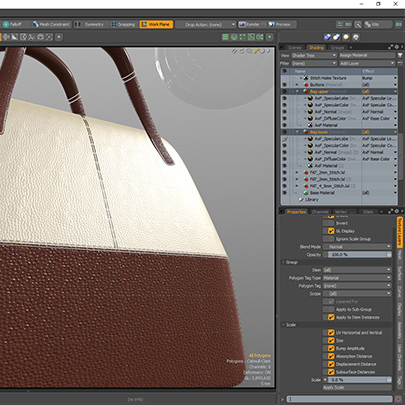
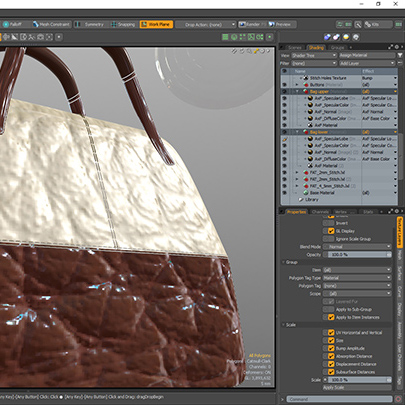
Making scale adjustments to complex materials just got a lot easier. Instead of having to dig through layers of textures and proportionally scaling each individual item, you can now quickly enter a scaling value that is correctly applied across all textures in a group.
We all spend enough time every day cleaning up. If you already have LPE’s for lights in your scene and you run the command to create them again, Modo no longer duplicates existing render outputs, eliminating tedious cleanup.
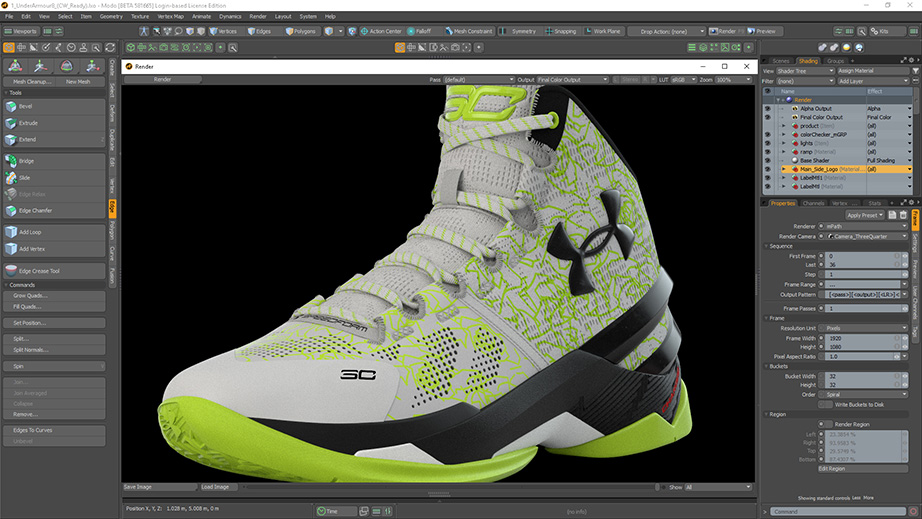
AxF or Appearance Exchange format is quickly becoming an industry standard for materials in 3D design applications. mPath, the new pathtrace renderer in Modo, now supports AxF allowing users to leverage these high quality material presets in Foundry’s newest cutting-edge renderer.
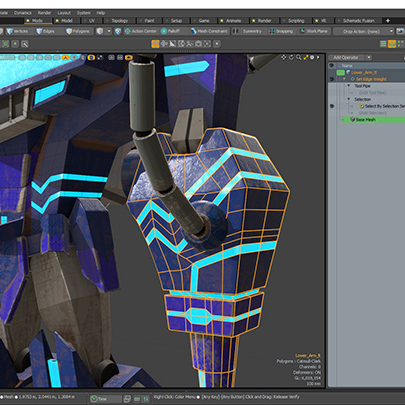
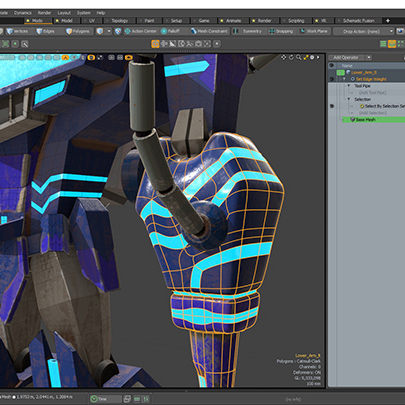
Vertex maps are useful in lots of ways. Modo contains a myriad of vertex map types and ways to use them. We’ve added support for vertex maps in our procedural modeling system, letting artists better exploit these maps procedurally.
Modo’s trackball rotation offers a unique navigation style vs. other 3d applications; it can be very powerful for orbiting singular objects but jarring for new users. Trackball rotation is now turned off by default, making it easier for new users to transition. However, we still encourage you to spend a day with trackball.
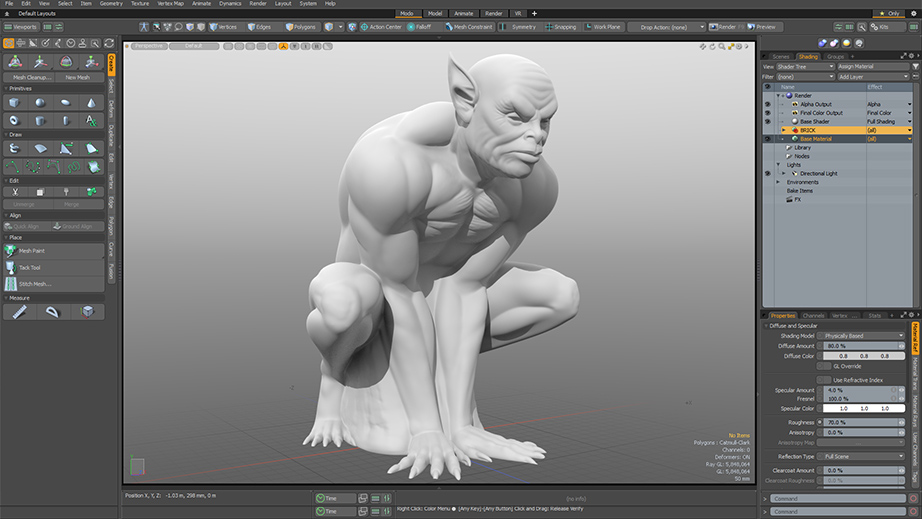
Language is an important part of software design. We’ve renamed the Vortex Deformer to Twist, making its behavior easier to interpret.
Modo’s selection tools are extraordinary and we are constantly evolving in this area. Select Partial provides an incremental improvement to our selection tools, giving artists more control over how components are selected in the viewport.