How DNEG moved the story forward with Mari.
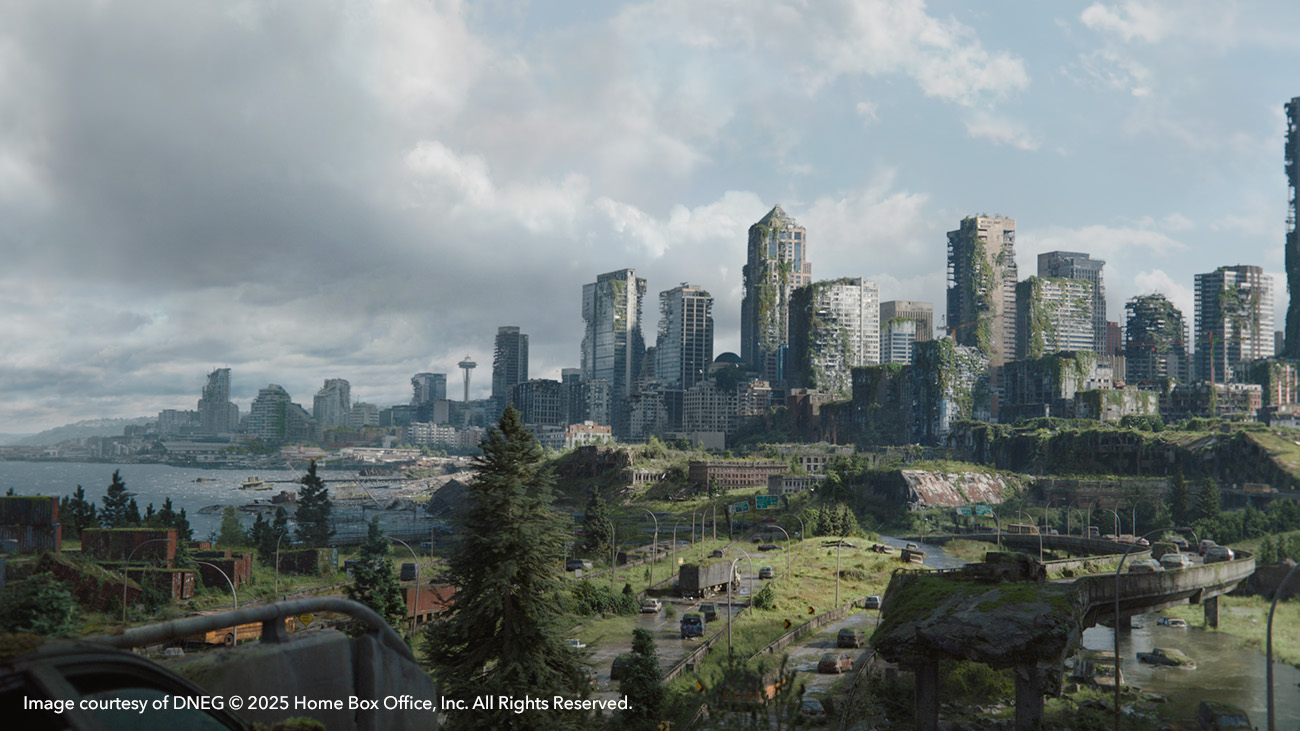
Based on the popular video game franchise, HBO’s The Last of Us is set in a post-apocalyptic world where a global fungal infection has destroyed society, turning people into deadly zombie-like hosts. Grounded in death and decay, much of the show is set against a backdrop of abandoned buildings, overgrown with untamed greenery.
Building on the look of the first season, DNEG completed a wide range of texturing and compositing work on The Last of Us Season 2, this time with the added challenge of a complex new coastal city location.
We spoke to Nitin Prakash Vade, CG Supervisor at DNEG, to find out how Mari helped the team to paint realistic textures that reflect the decay of the post-apocalyptic Seattle cityscape and waterfront.
The Last of Us S2: Moving the story forward
Five years on from the events of the first series, The Last of Us Season 2 sees Ellie and friends venturing to Seattle to seek vengeance against nemesis Abby and her group from the Washington Liberation Front (WLF). The series has a similar overgrown look to its predecessor, with the key difference in the story being the conflict between several warring factions.
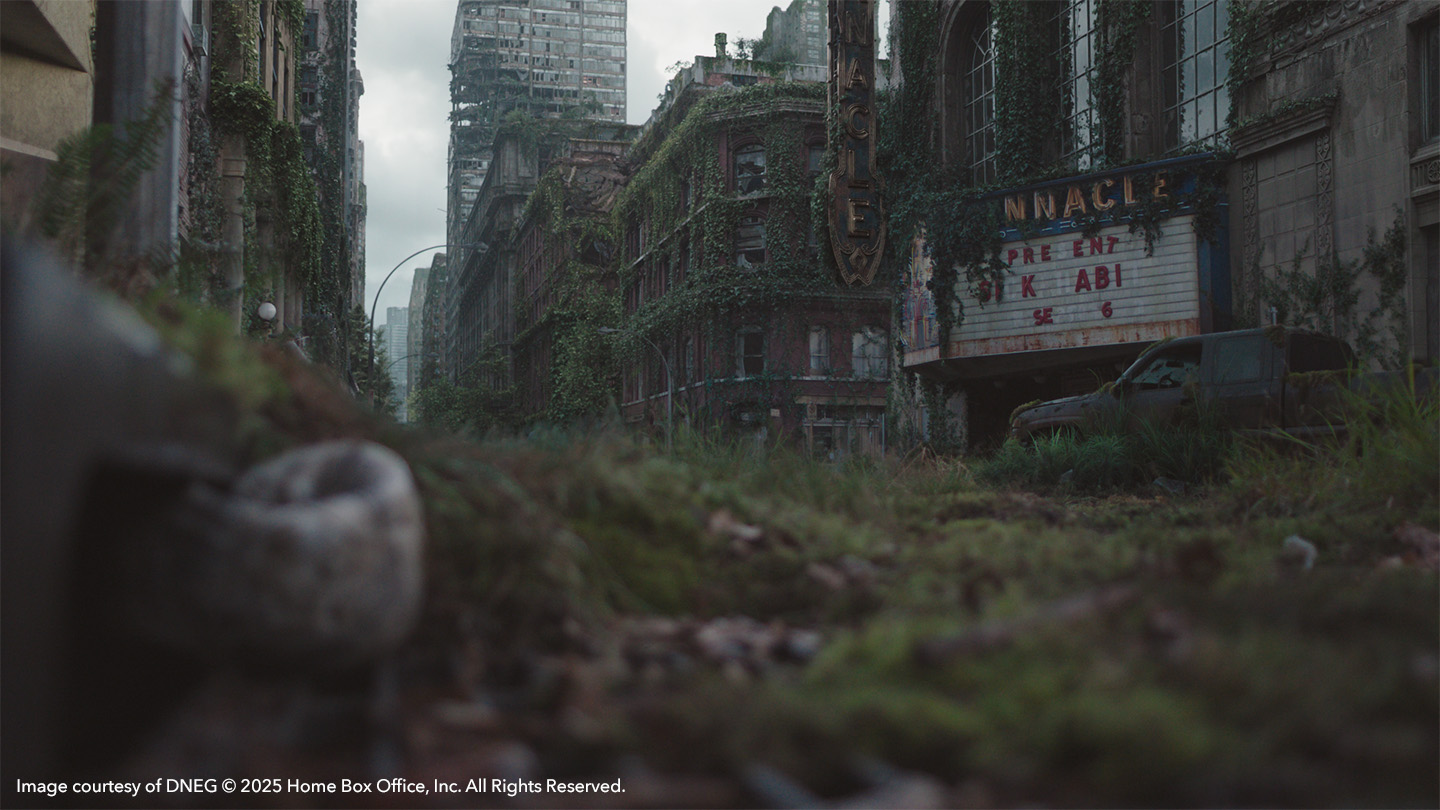
To tell the story of the hostilities between the WLF soldiers and the brutal religious cultists, the Seraphites, the team added bullet and blood marks to the city streets, based on real-life images, along with stains to reflect the infected inhabitants’ interactions with the buildings.
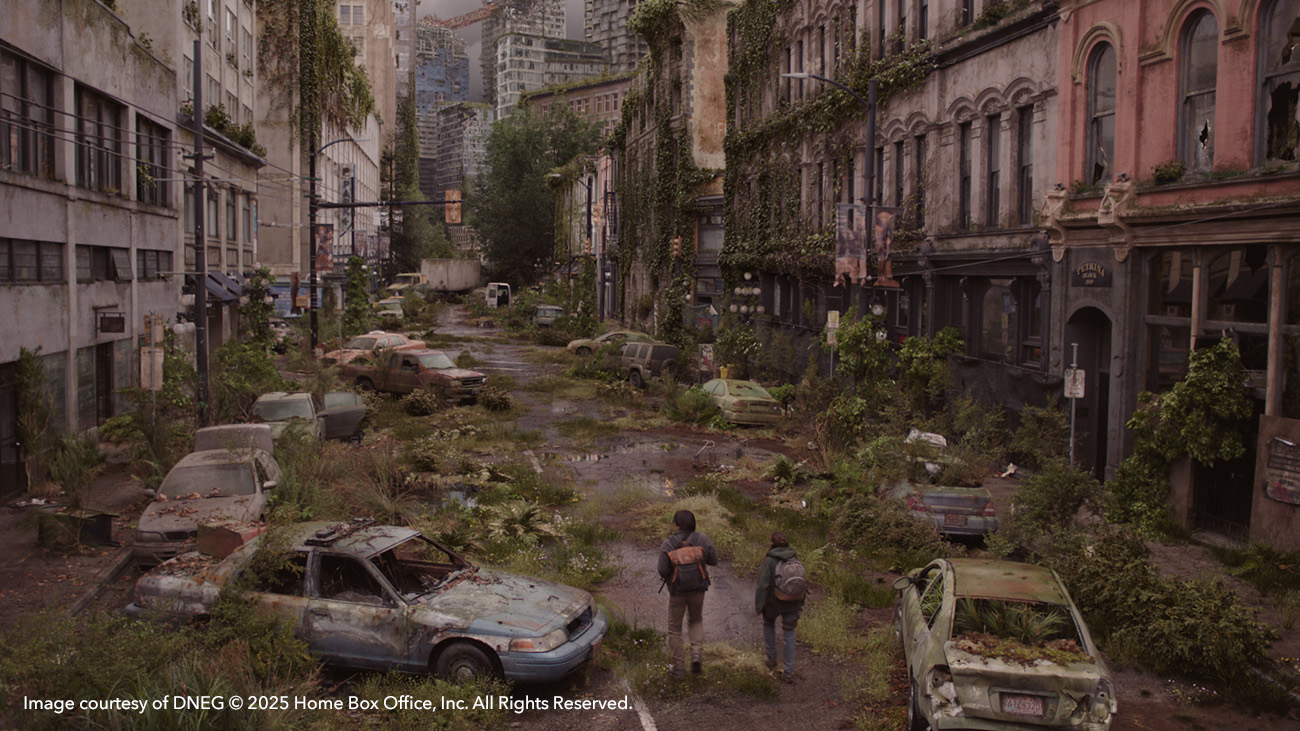
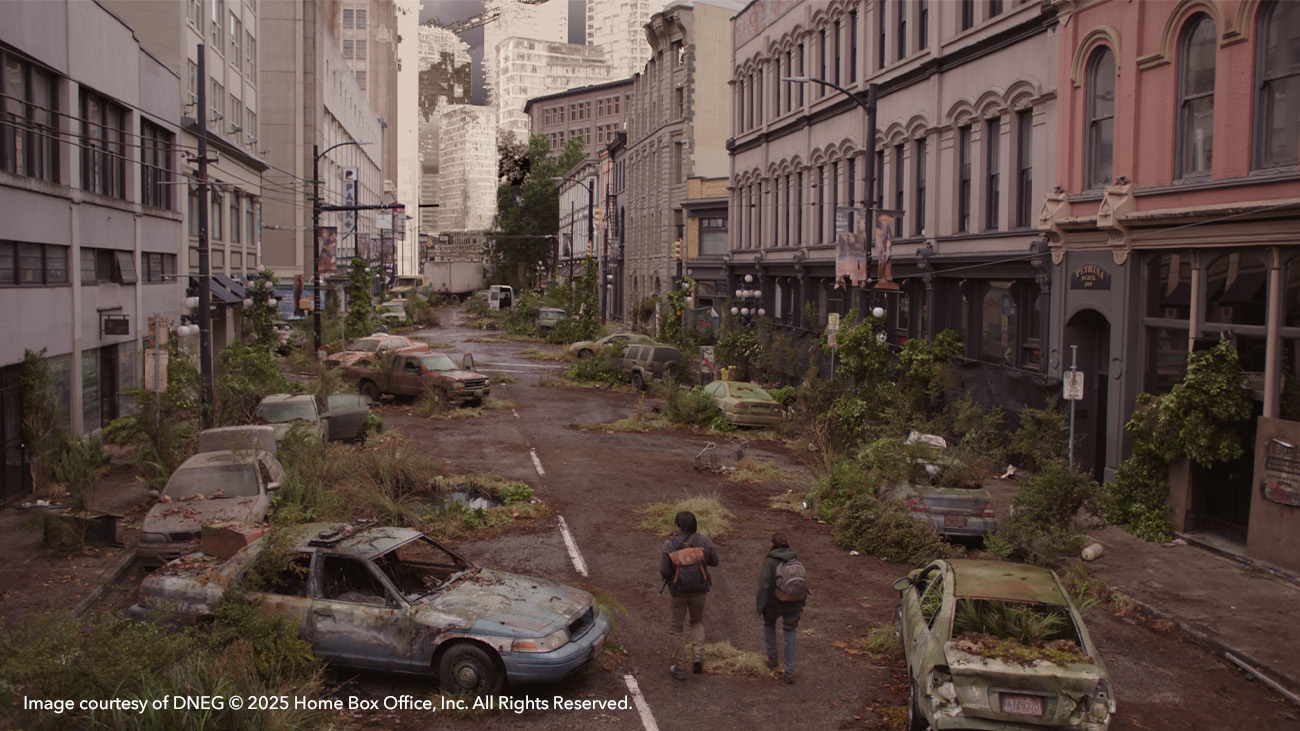
DNEG worked on a variety of assets, from crowd characters, and WLF soldiers, to around 30 damaged vehicles, with their look variants, that line the streets of Seattle. A key part of the team’s work was the age-worn buildings, including around 25 hand-painted hero buildings with low-poly count variants to scatter in the background, along with five high-poly count building assets that were based on set references.They also created a high number of deep background buildings, using procedural workflows in Mari.
Building a cityscape with Mari
Having worked on The Last of Us Season one, DNEG already had a bank of procedural textures to get started with. The ability to create a material for one building, store it in Mari’s asset library, then apply it across multiple assets, helped the artists to work more efficiently. For the background hero buildings, the team wanted to add more grunge and hand-painted textures.
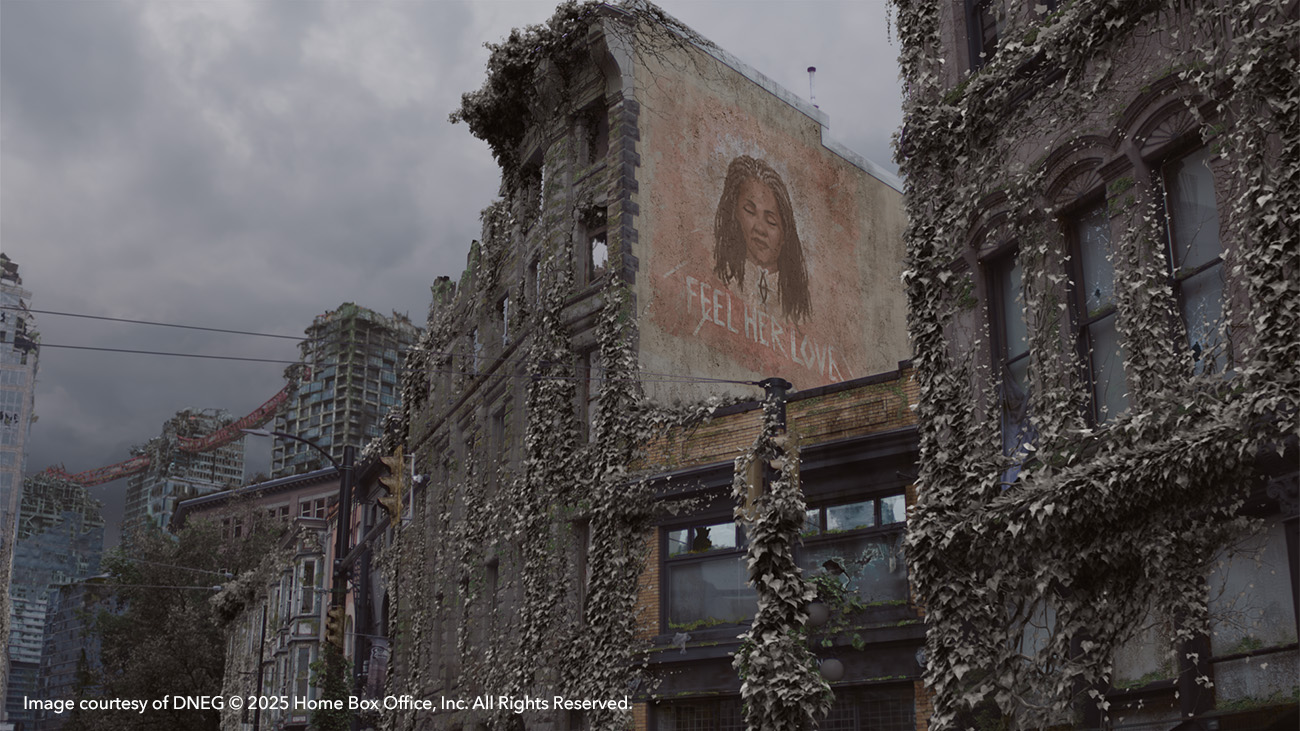
“We used Mari for generating the curvature maps and cavity maps for the damaged background buildings,” says Nitin. “Mari was really useful for generating masks through ambient occlusion, especially for the cavities in the corners. These masks helped us establish the base textures for moss and grime, and combined with hand-painted maps, were essential for creating the trailing ivy.”
Texturing the abandoned theater
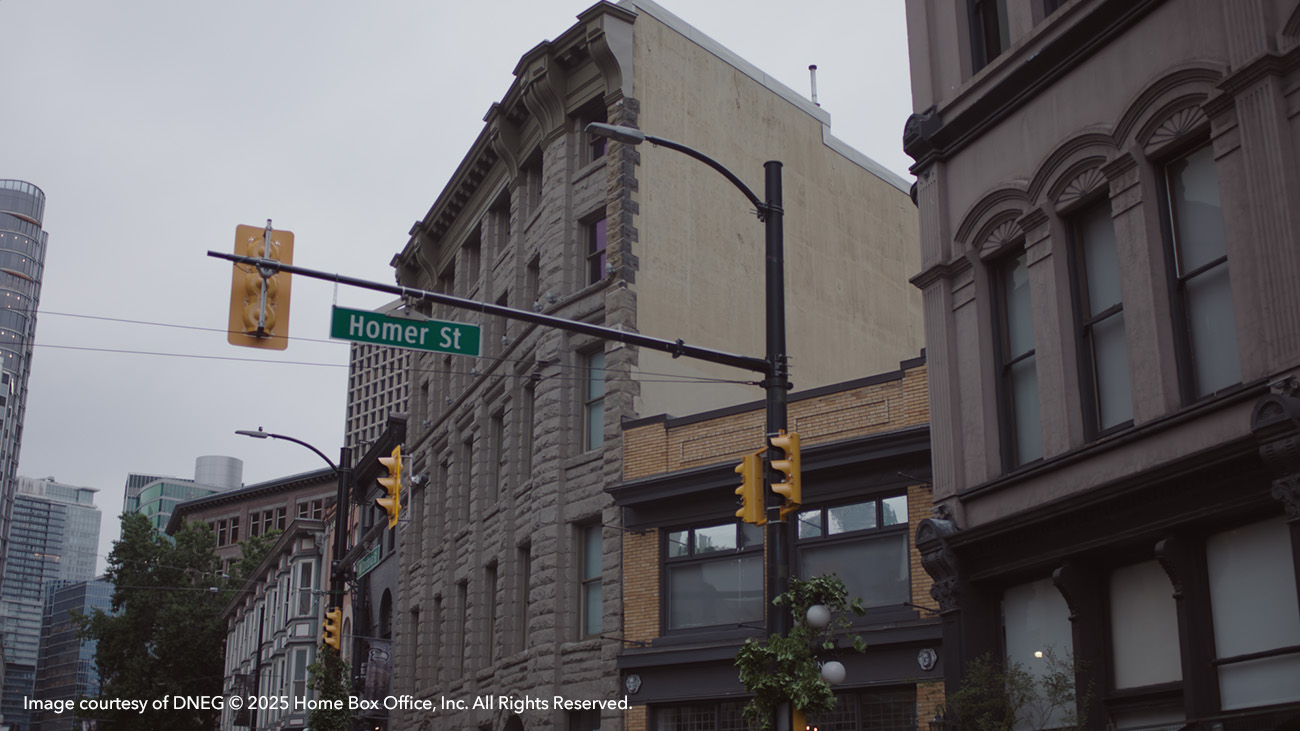
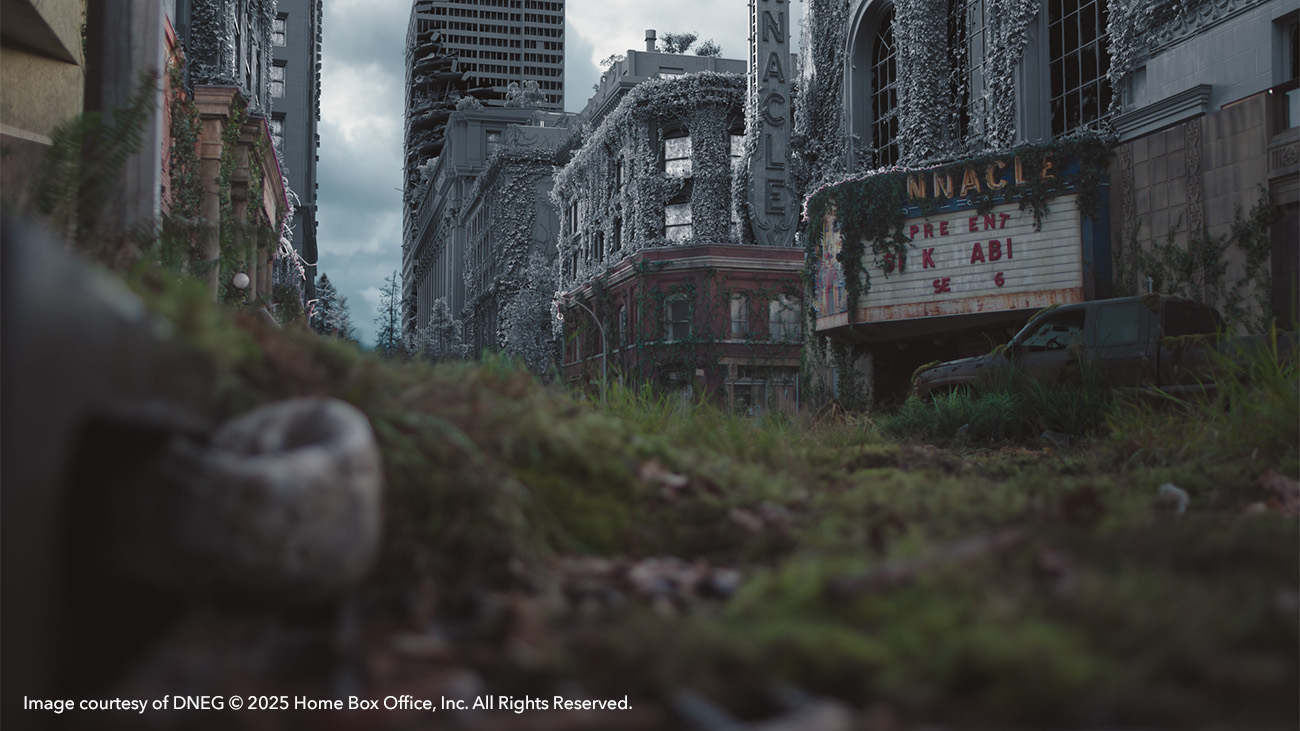
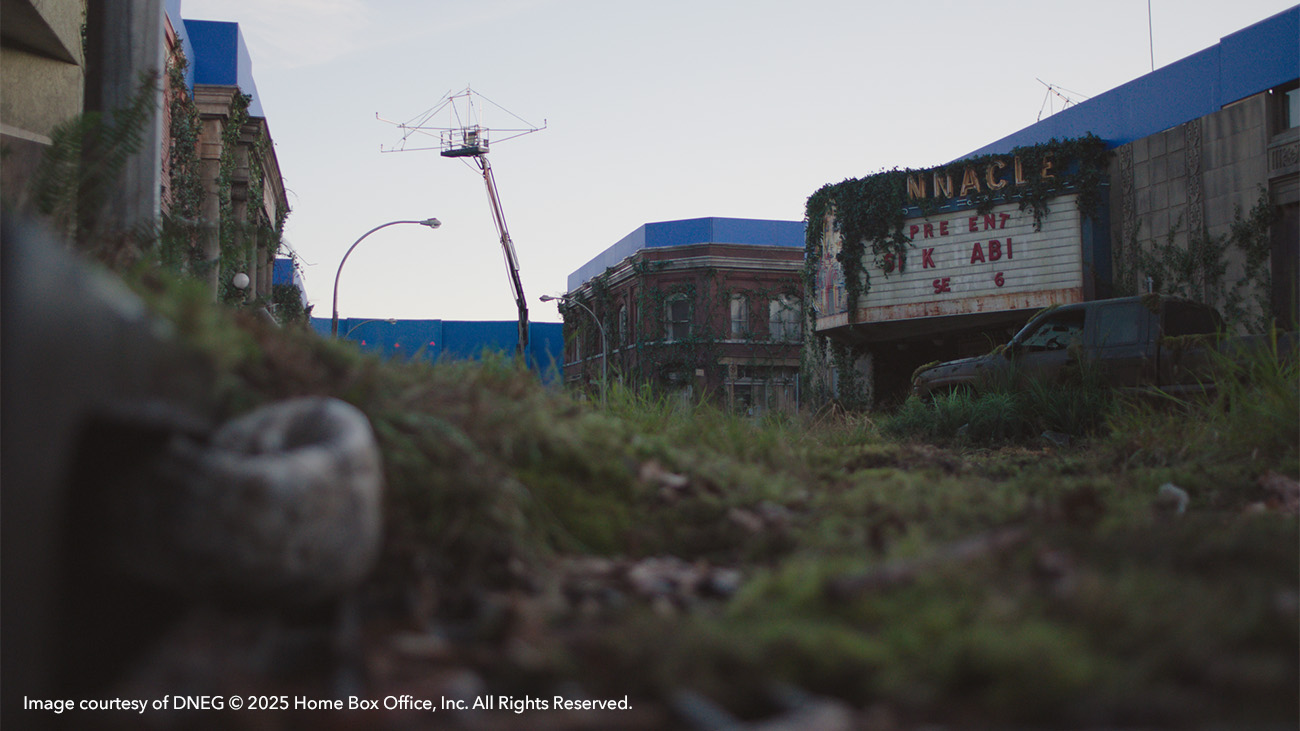
For some of the key buildings in the show, there was an on-set reference. To recreate the abandoned theater where Ellie and Dina take shelter, the team used photogrammetry to stitch together 2D reference shots, and project textures onto the geometry.
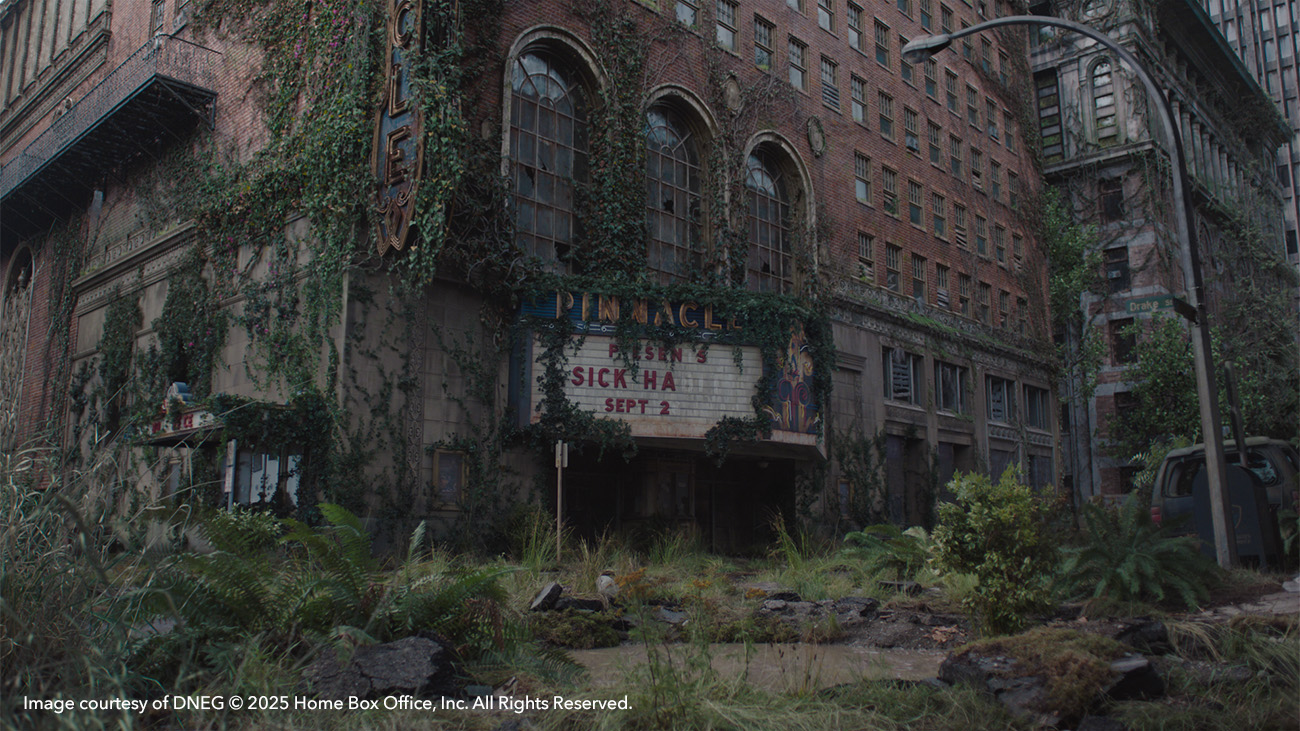
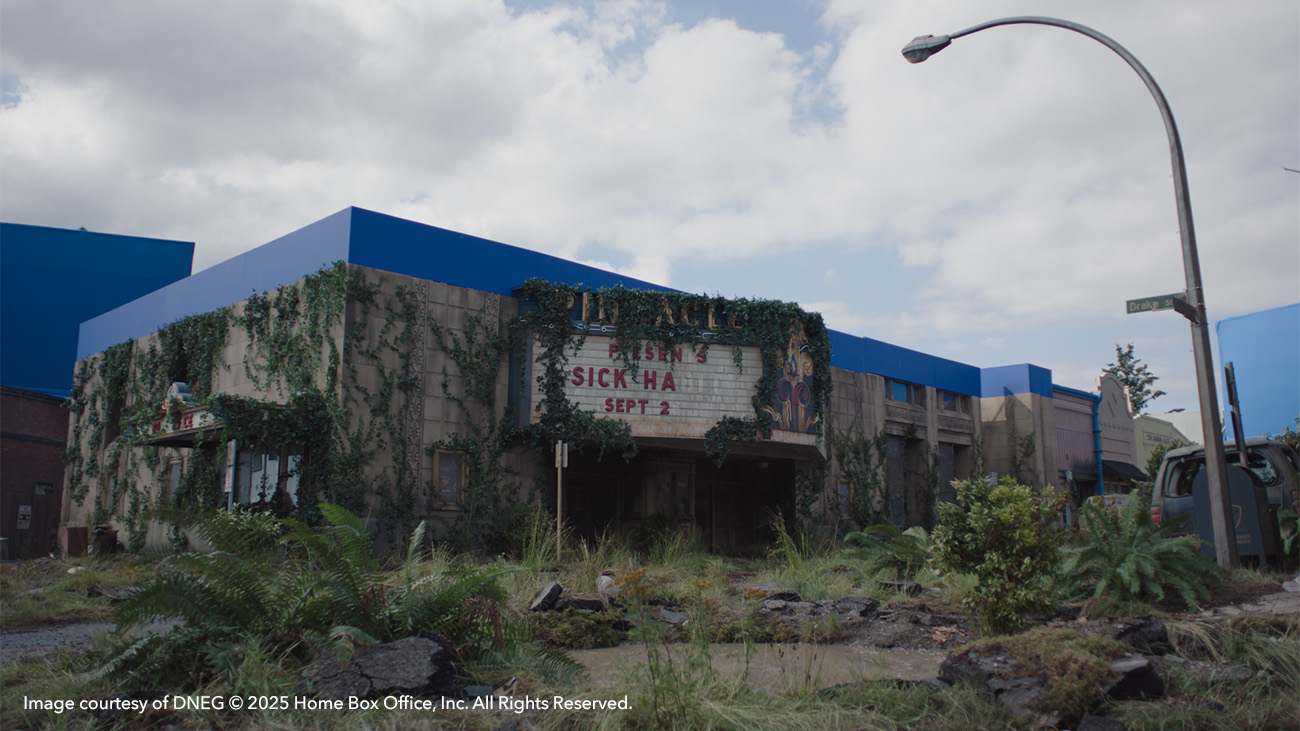
“Wherever we had holes in the photogrammetry, we used Triplanar maps to generate seamless textures which we could then export,“ says Nitin. “This gave us a base albedo map, on top of which we could hand-paint grunges, plaster damage, peeling paint, and missing bricks.
“When we want to add textures and work on extensions to photogrammetry images, Mari is the one tool that our artists really like to use,” says Nitin.
Bringing realism to The Last of Us S2 finale
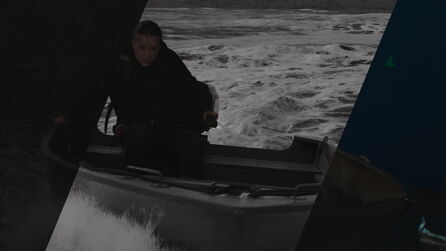
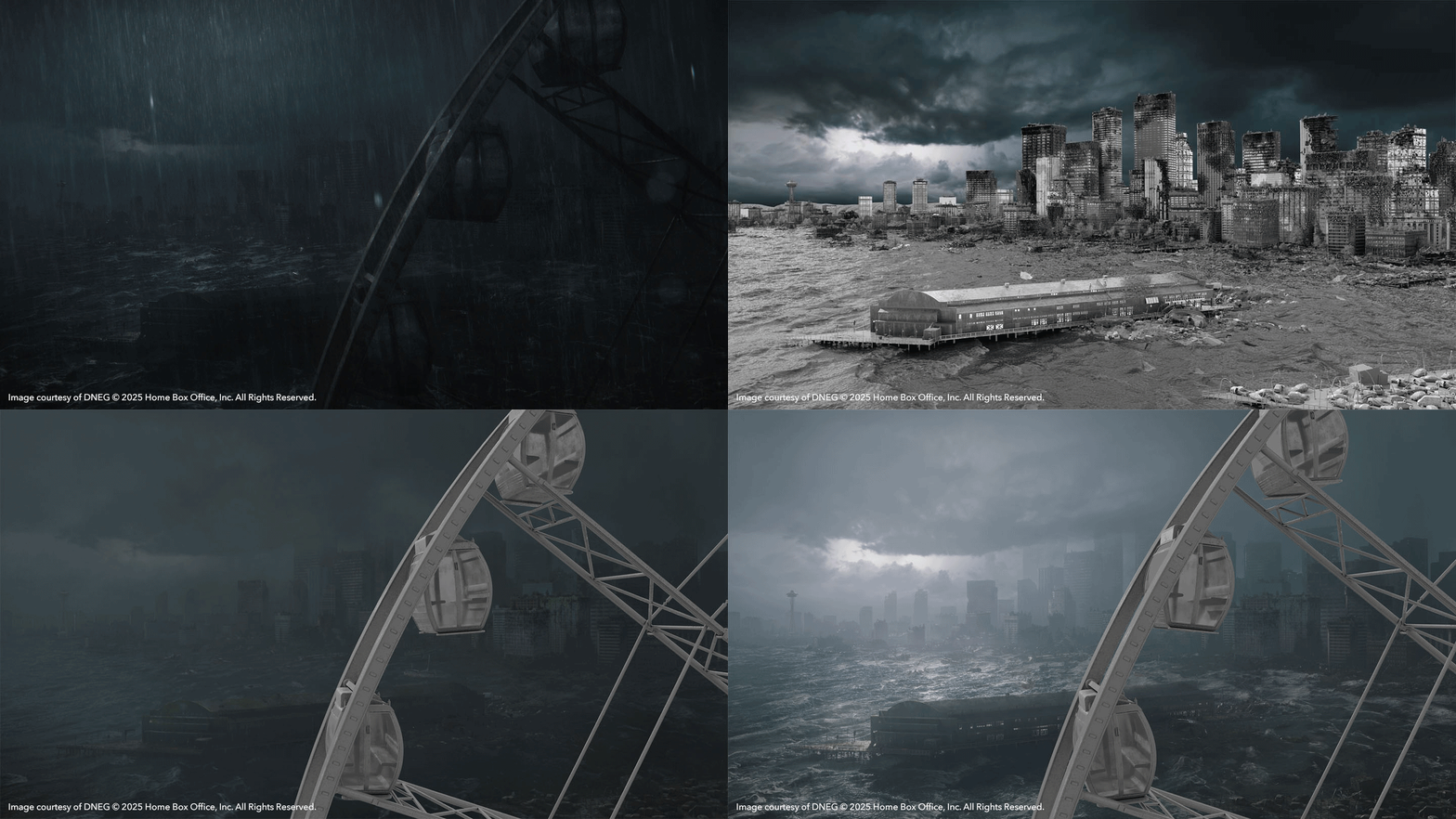
Nitin’s favourite asset to work on was the non-fictional Seattle Aquarium for the season finale. To accomplish a high level of realism, the VFX supervisor provided the team with reference shots filmed while taking a ferry out to the location, to map out Ellie’s boat journey.
“We wanted the aquarium to be as photoreal as possible,” says Nitin. “The challenge was to make it look damaged and broken, and we had to think about how it would have eroded from long-term interaction with the salt water.”
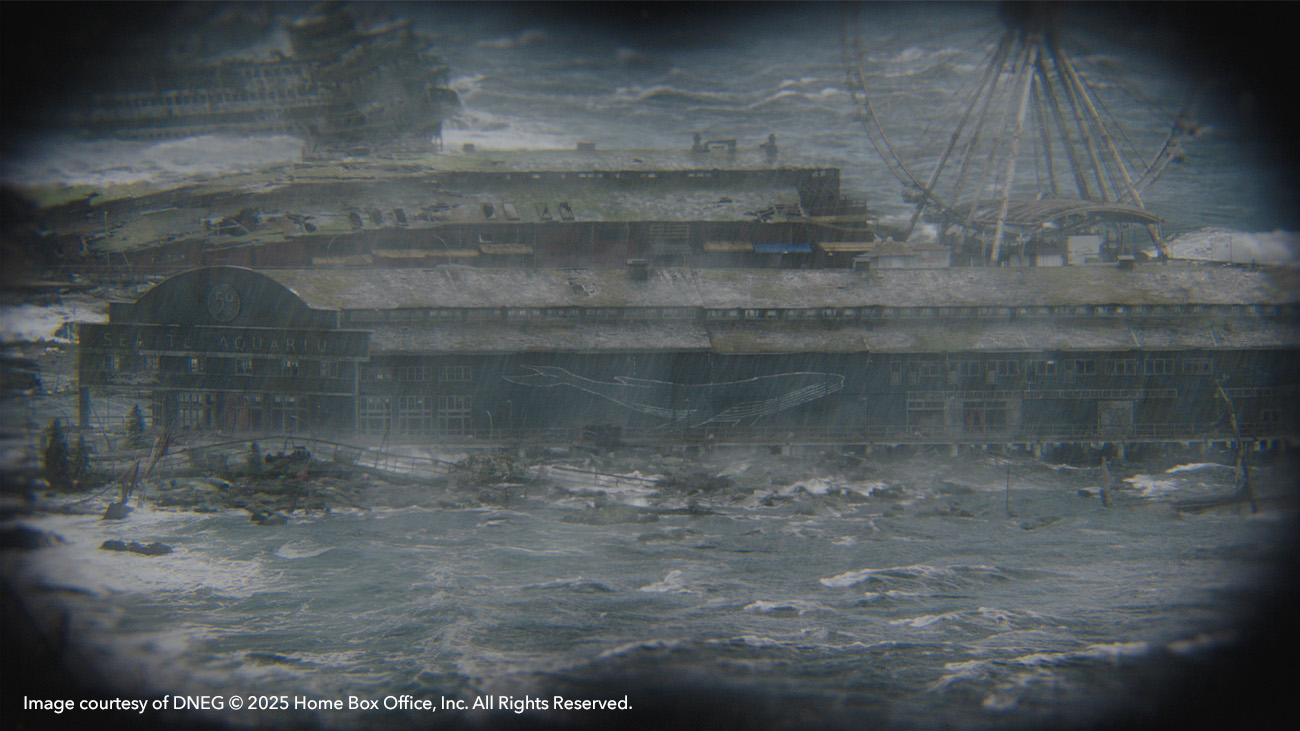
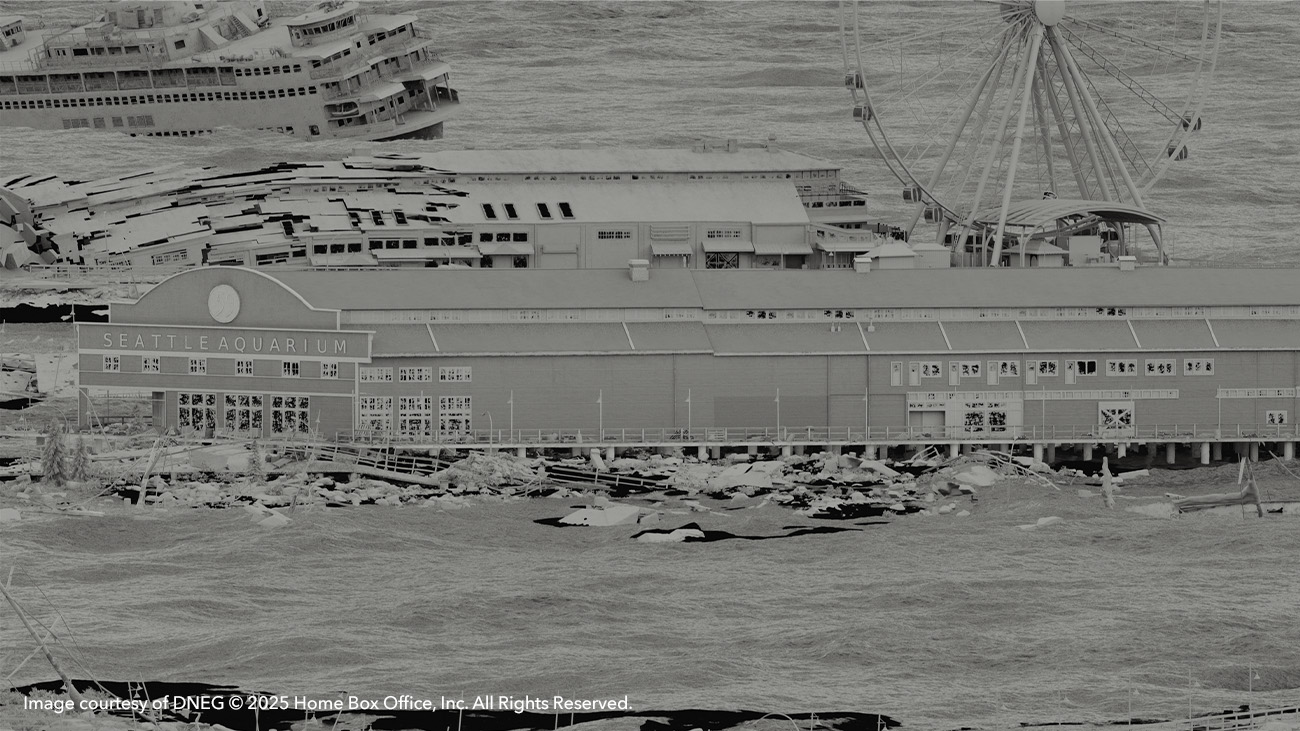
The team used roughness maps and different masks in Mari to create broken and eroded wooden planks where the ocean water would have been spilling onto the dock. They used a noisy specular map to create cavities to show where dirt had accumulated. They also added additional erosion layer textures, hand-painting grunge and rusting to the metal in the foreground, using wet maps to reflect the damp look of the rain and sea-sodden building.
The scene is further complicated by the lightning storm happening in the background. Nitin explains: “The specular intensities for the background scattered building needed the wet maps to react correctly to the lightning flashes to stay consistent with the overall scene lighting. The lighting also helped reveal the roughness and different material textures, supported by the Specular AOVs used in lighting and comp.”
Supporting artists with an efficient tool
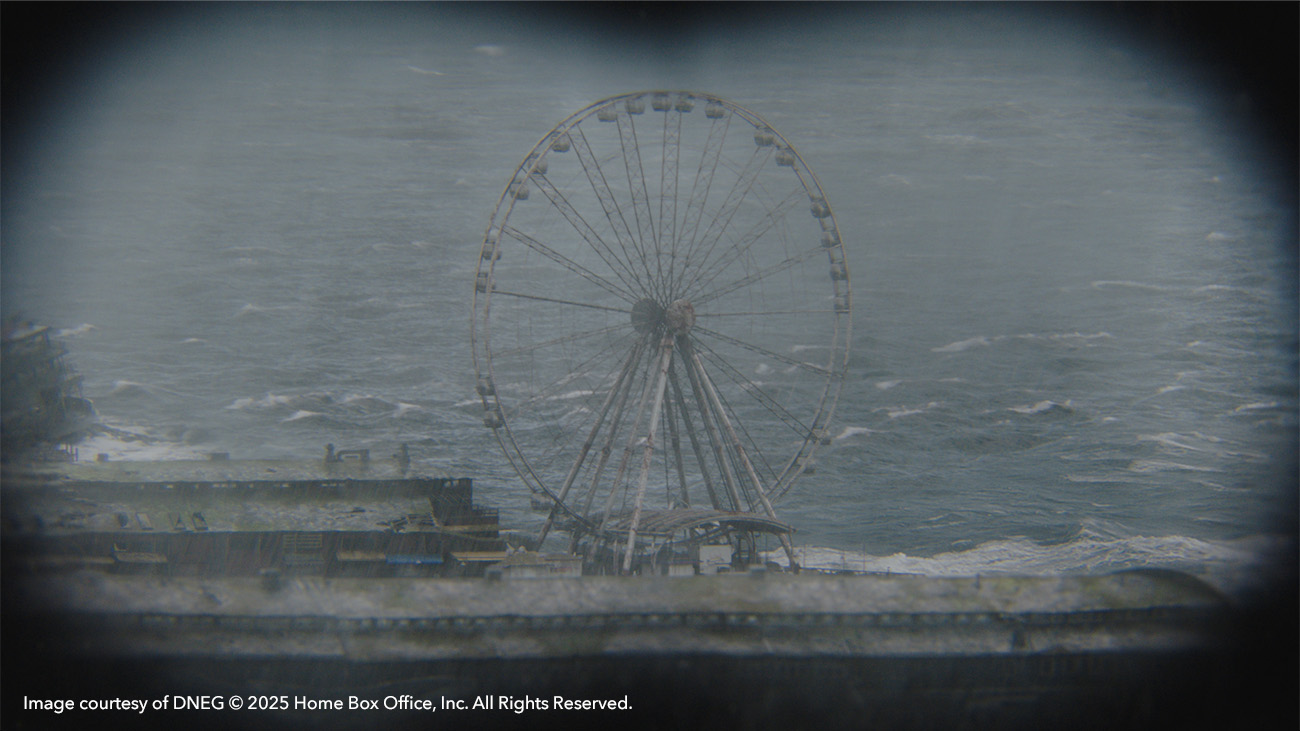
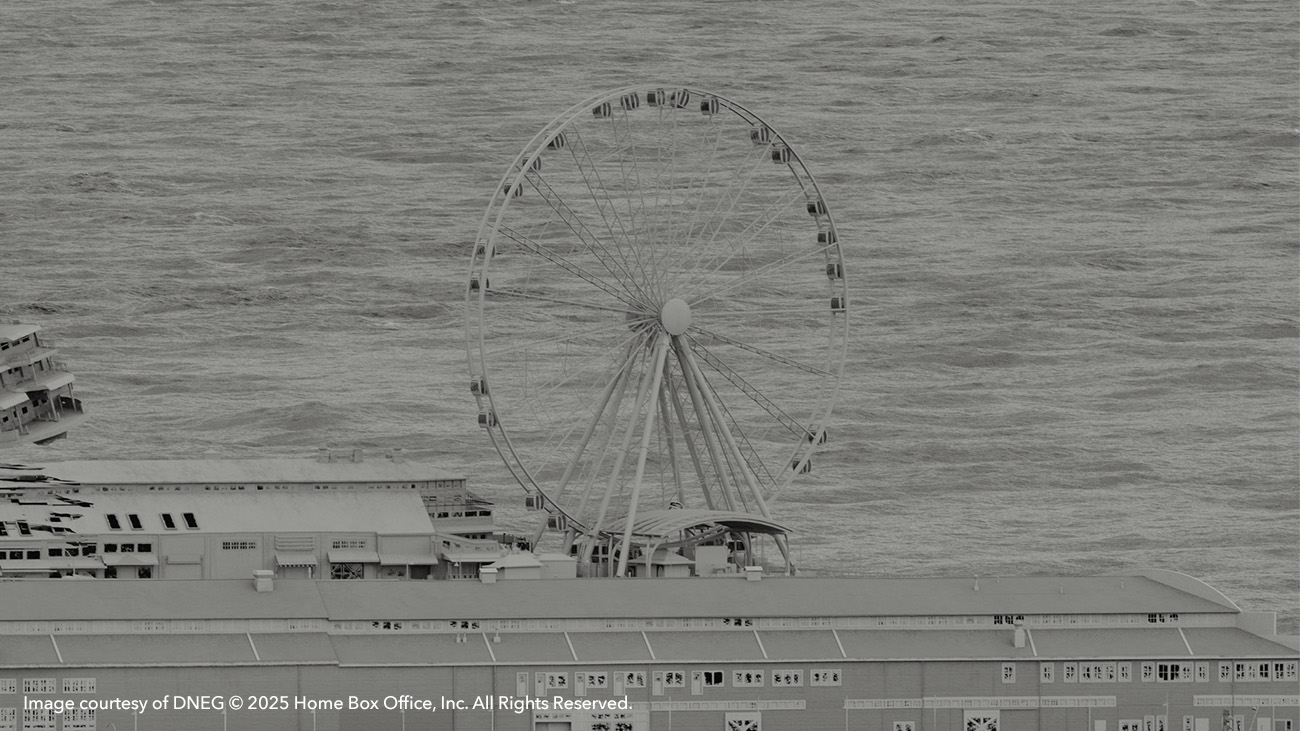
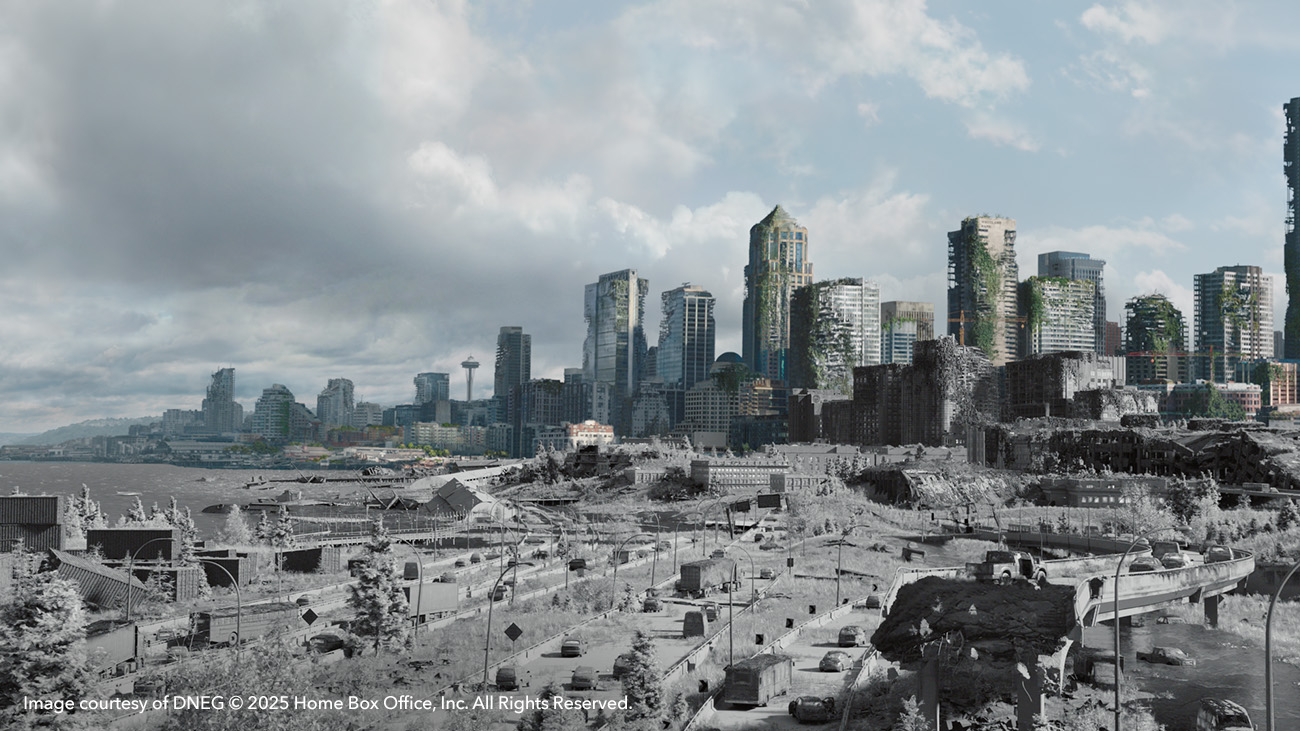
One of the most challenging sequences that DNEG completed was Ellie and Jesse looking out over the city and waterfront from the top of a high building in the season finale. This involved three different viewpoints, with 29 separate shots, showing more than 200 buildings — up to 80 of which were visible from each view — along with key assets including the aquarium, and a full CG Ferris wheel.
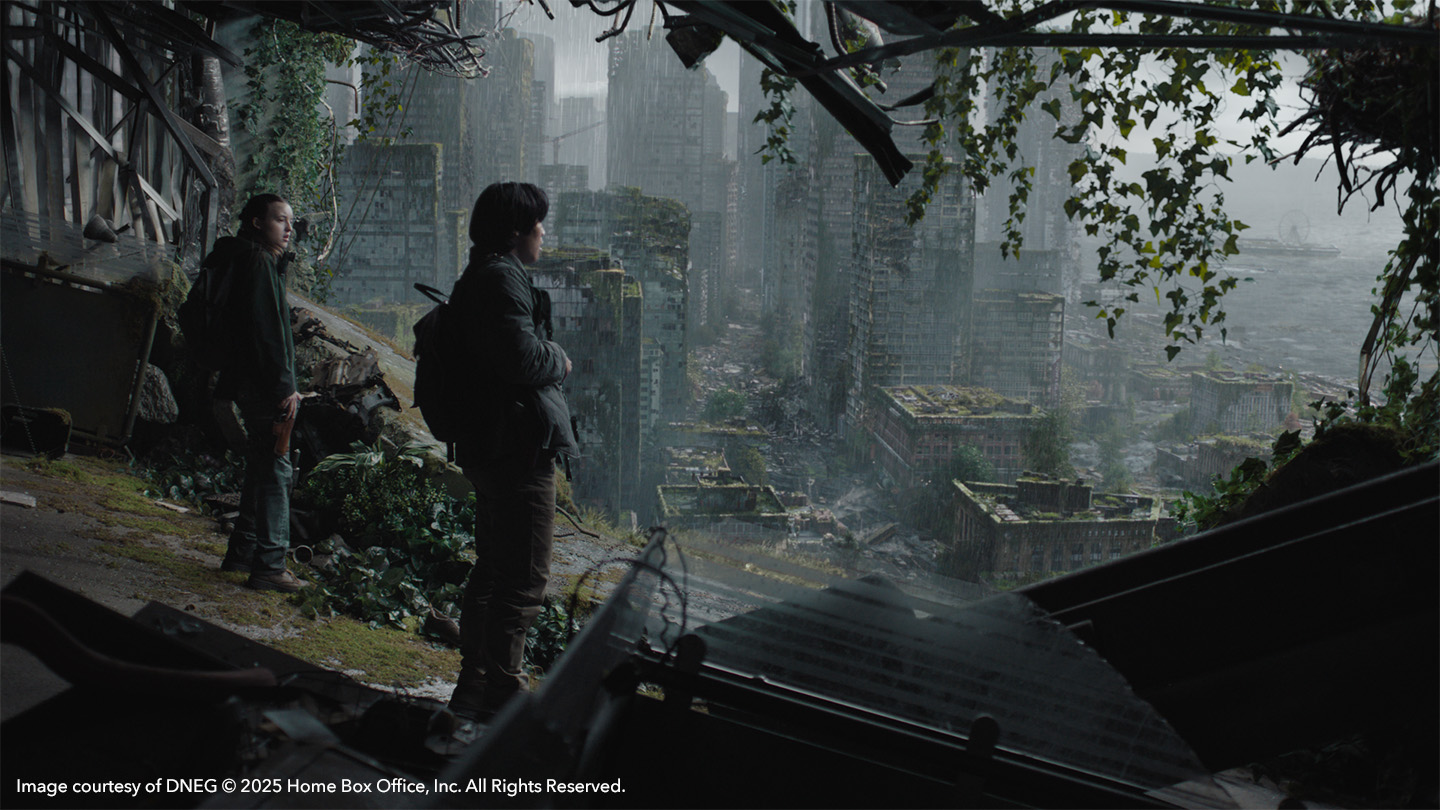
“For the background buildings, we used procedural textures, lowering the resolution down from 2K and 4K down to 512 and 1K, to reduce the UDIM counts on each building variant,” says Nitin. “That meant we were able to have three cameras, with a stitched output. If we hadn’t optimized the building assets using Mari’s procedural texturing, it would have been much harder to render the scene. To give more detail to these lower-UDIM assets, we added multiple layers in Mari, including procedural fractals to make the textures more uneven.”
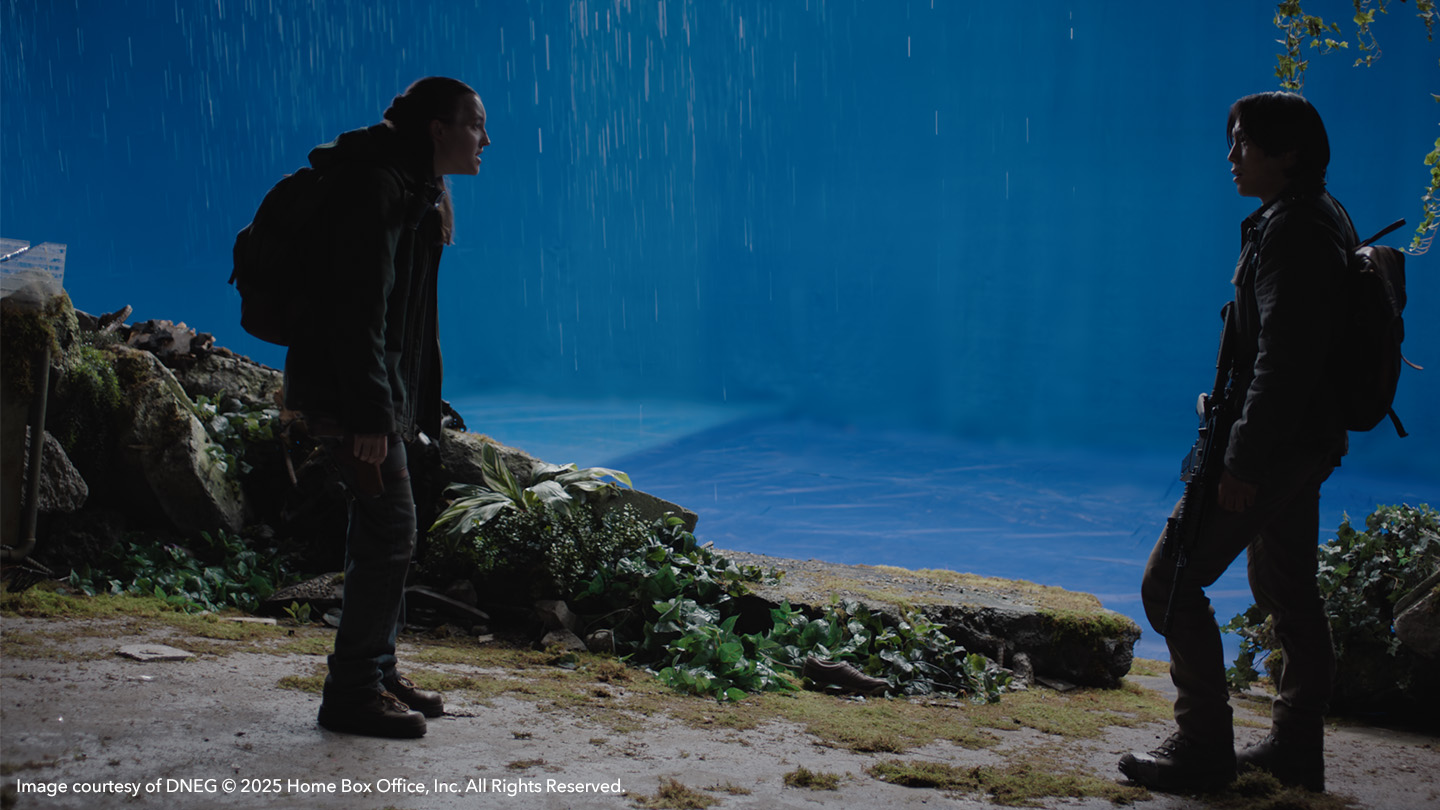
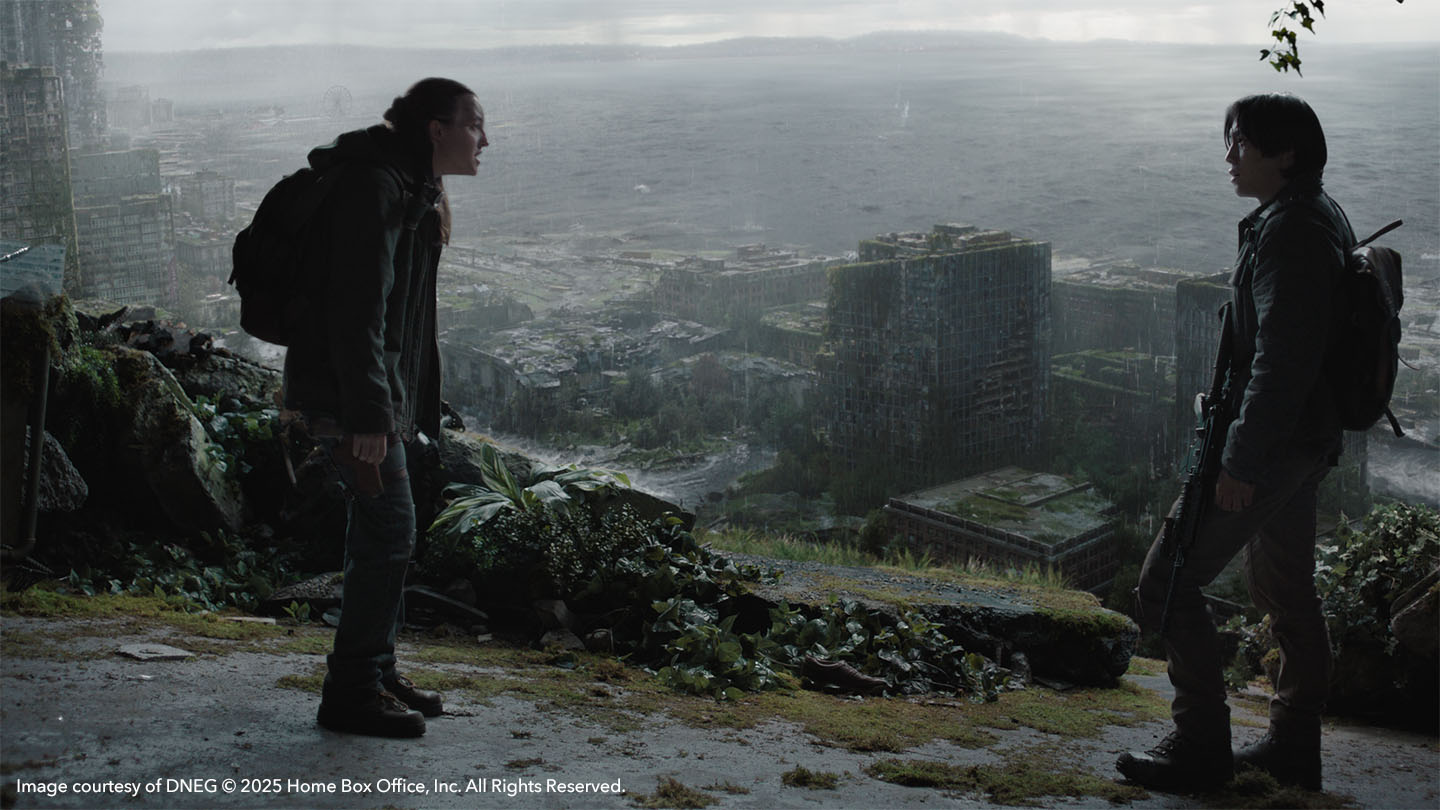
To further optimize the textures, the team baked the assets separately, reducing eight to nine textures down to three or four for a more efficient render output.
Mari’s texture-baking engine, the Bakery, was introduced in Mari 7.0, enabling artists to transfer detail from a high-resolution object to a texture map that can be used at a lower resolution.
“We plan to use Mari’s Bakery on the current project we’re working on,” says Nitin.
The joy of painting grunge
Decay and damage are a huge part of the storytelling for The Last of Us, but why is it that artists love painting grunge so much?
“Artists always have fun painting grunge and rust. Mari is really useful when it comes to painting on the curvatures and projecting photoreal maps, because it adds character and history to a surface,” says Nitin.
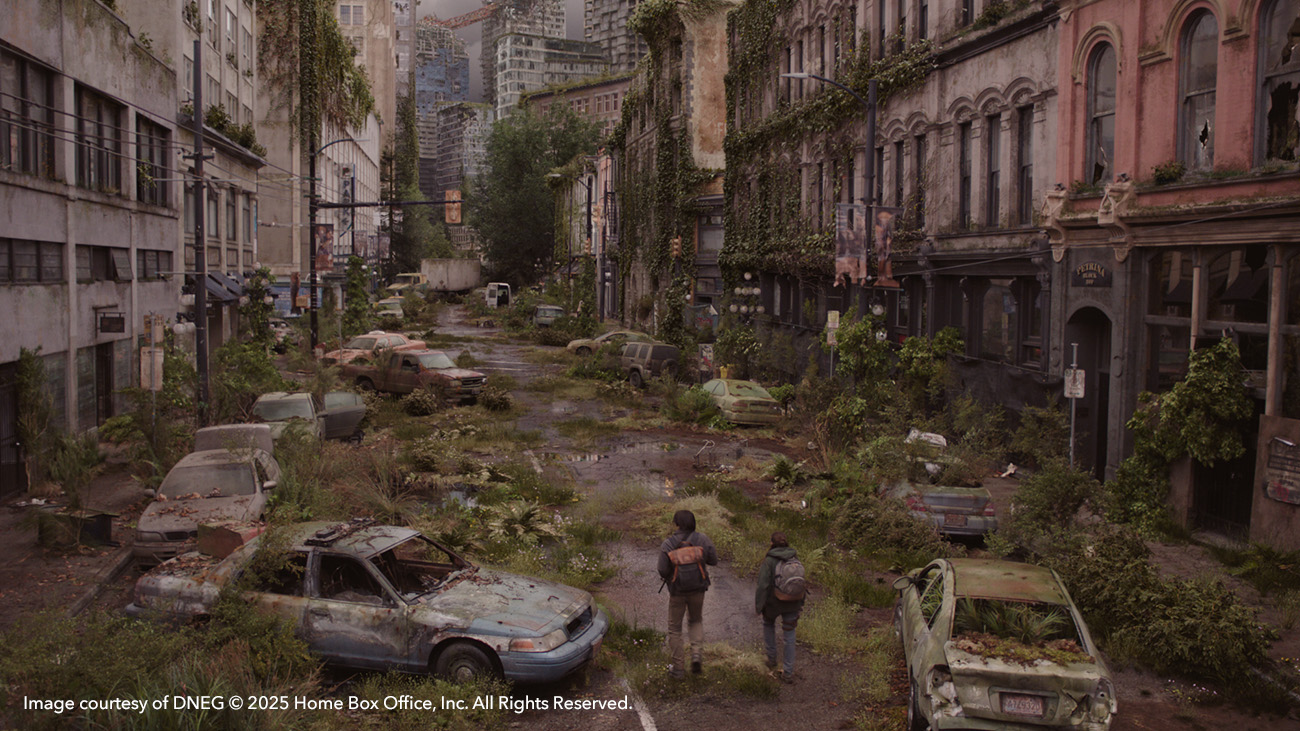
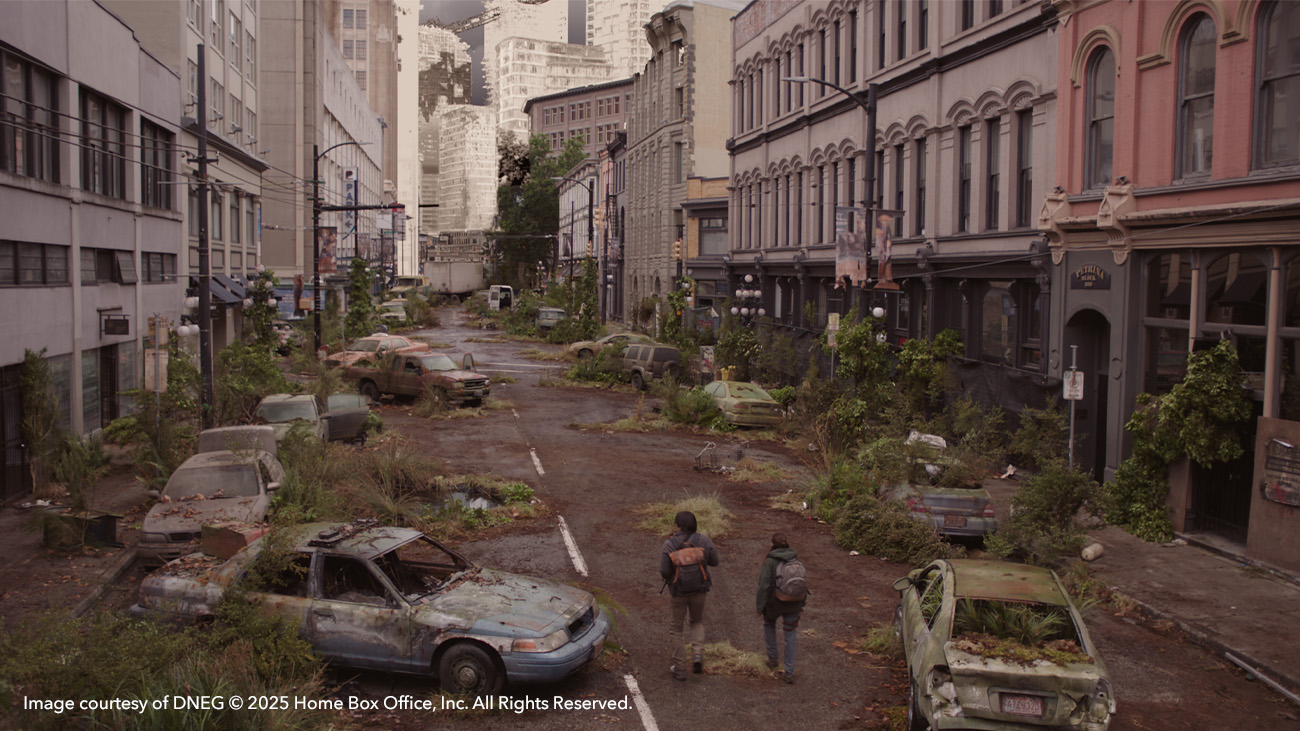
“I think it makes artists happy to see something they’ve created that genuinely looks like something from the real world. Because in the real world, things are not clean. They have smudges and other imperfections that junior artists might not see. The more experienced artists are, the more they see.
“And often, less is more. We want to really sell the asset, and not overcook it. It has to be realistically blended. Mari, for me, is all about making it fun to paint and recreate photoreal surfaces that support the VFX supervisors’ and directors’ vision, helping to showcase the story more effectively”.
Check out DNEG’s The Last of Us S2 VFX breakdown:
Want to know about how the latest version of Mari can help support your projects? Find out what’s new in Mari 7.5.