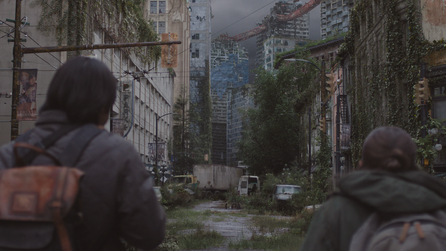
Creating the stormy seas of dystopian Seattle with DNEG.
HBO’s post-apocalyptic drama, The Last of Us, is well known for its dystopian landscape characterised by decay and overgrowth. For The Last of Us S2, DNEG needed the VFX to maintain the visual style from the original, while pushing the scale and complexity of the shots, especially with the new challenge of water and heavy rain.
We spoke to Francesco Dell'Anna, Compositing Supervisor at DNEG, to find out how Nuke helped the team to navigate the rough waters of season two.
The Last of Us S2: Understanding the director’s vision
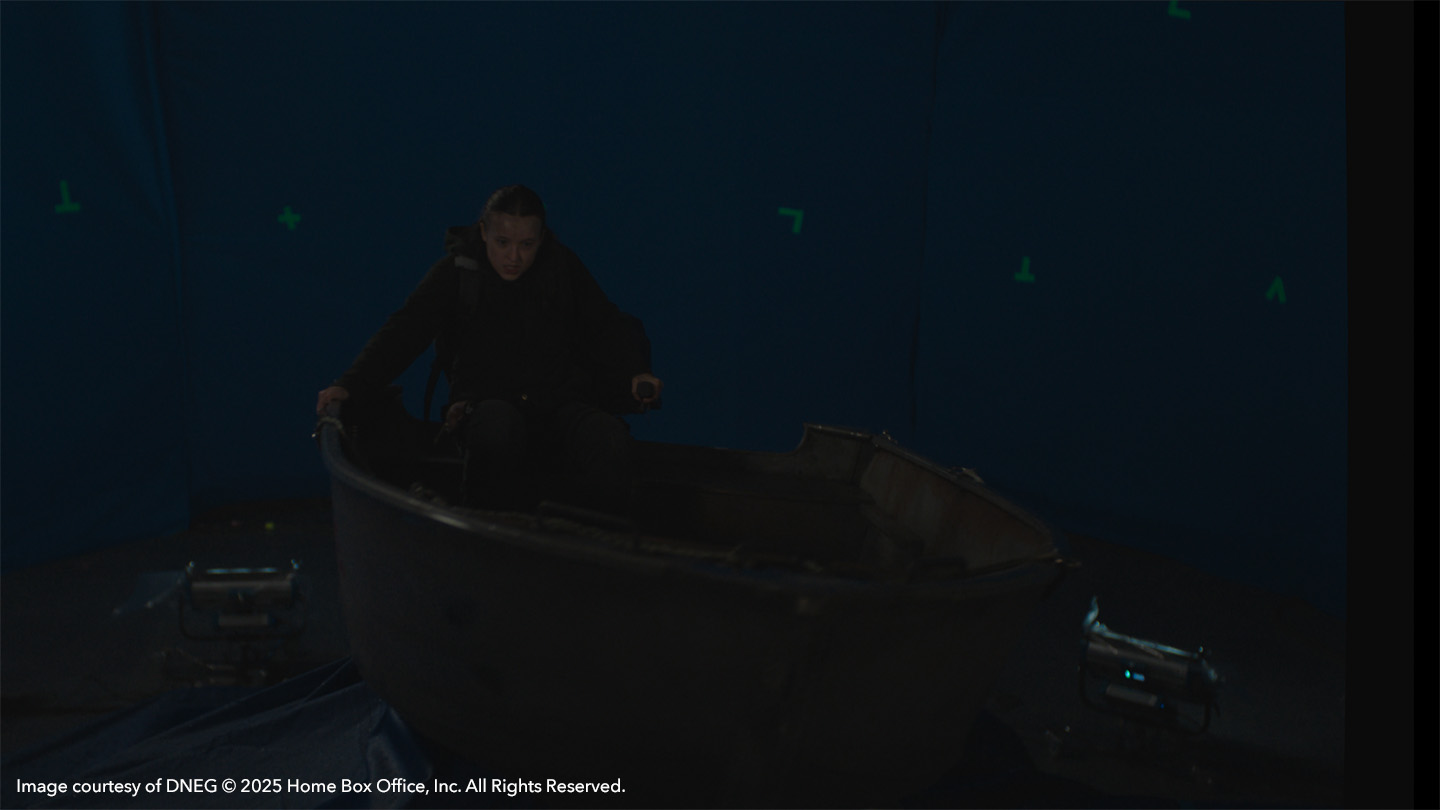
DNEG’s compositing team rose to the challenge of The Last of Us S2's new water elements for the season finale. This episode sees lead character Ellie navigating a small boat during a thunderstorm, ultimately being struck by a massive wave and washing ashore in enemy territory. The sequence consists of dozens of heavy water and full CG shots. Around 20 compositing artists, split across multiple sites, worked on the sequence at its peak.
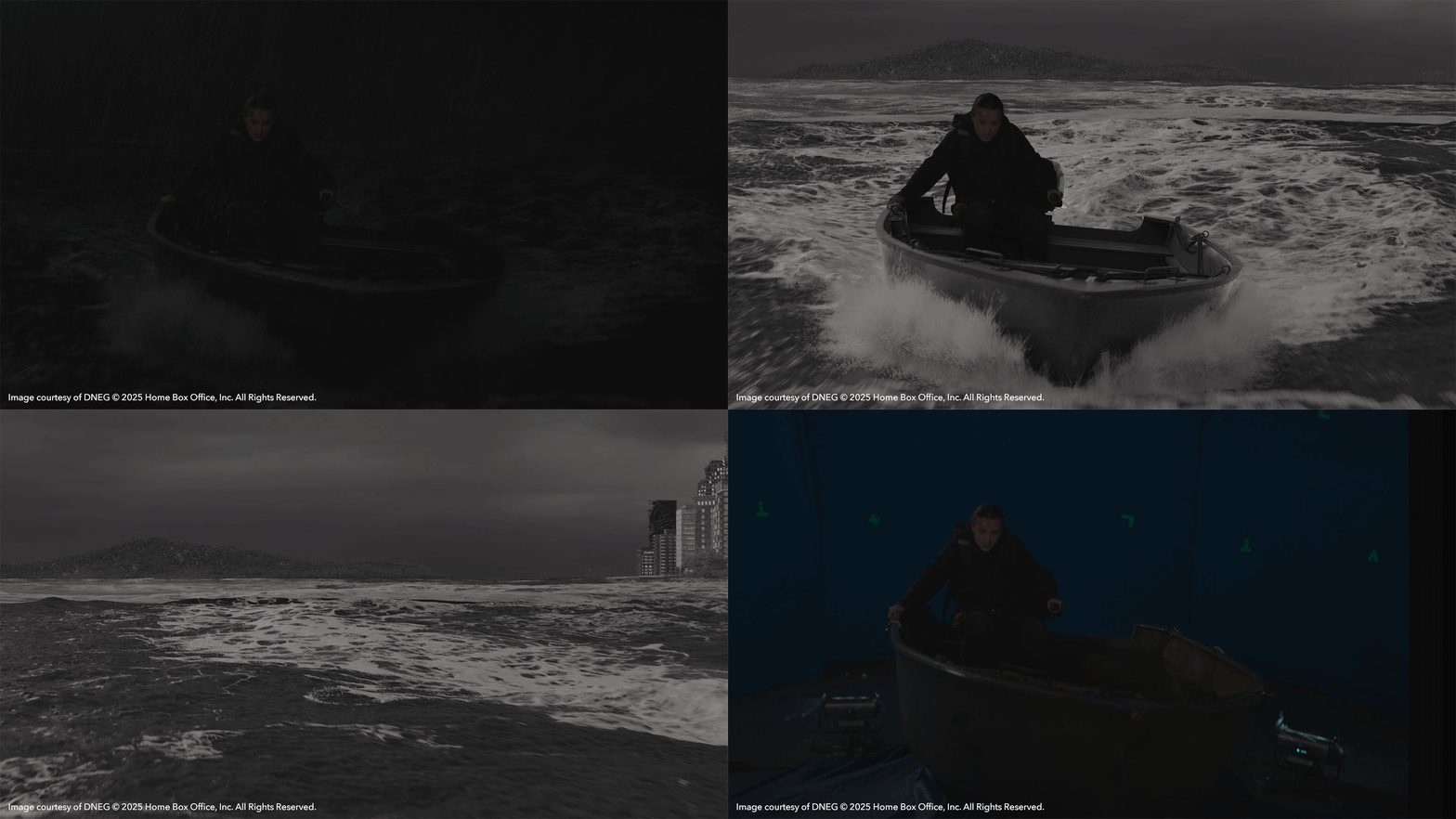
One of the biggest challenges for the 2D team was to understand and execute the director’s vision, treading a very fine line between a dark, moody look, and visibility for viewers.
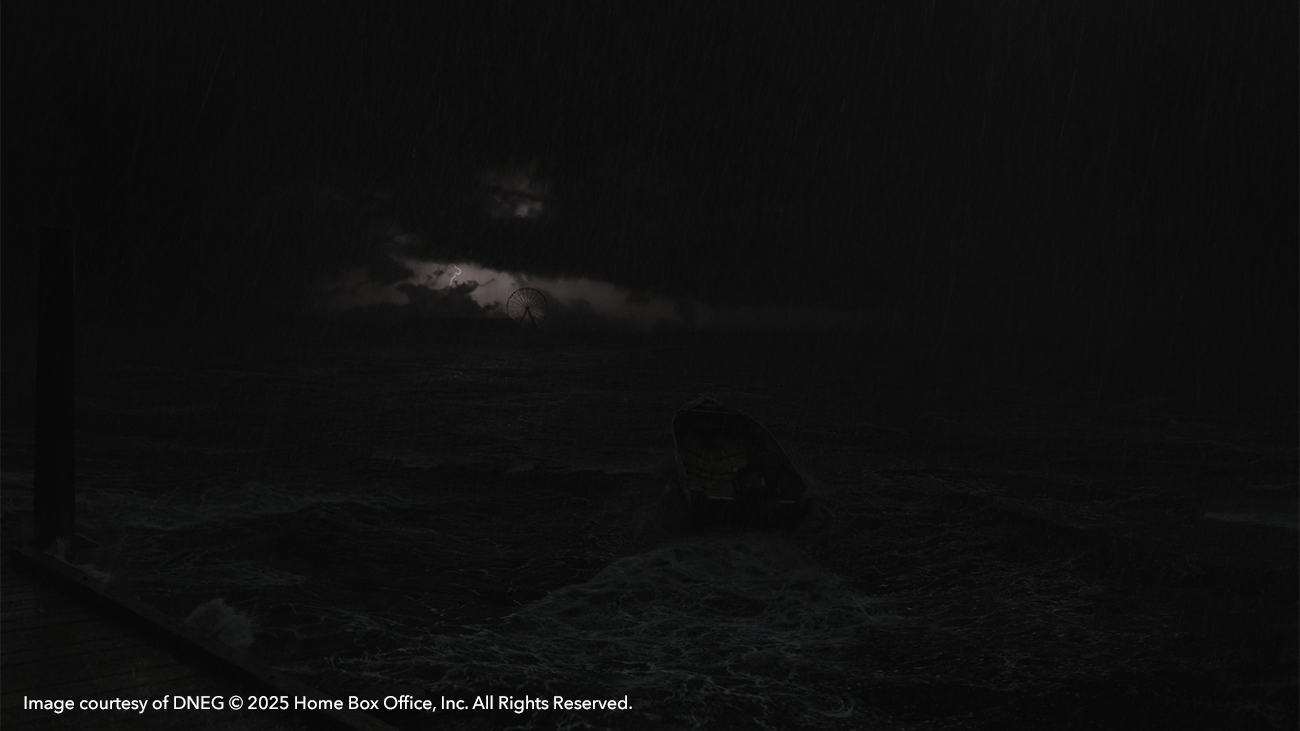
“The director wanted to keep everything very dark, with a moonless sky, yet the audience still had to follow the action,” explains Francesco. “The idea was that the scene should feel as though it was lit by cinematographer’s lights, placed just off screen. So rather than sticking strictly to physically accurate lighting, we had to shape the scene so that the storm felt dramatic and threatening, but Ellie would remain readable in the frame.”
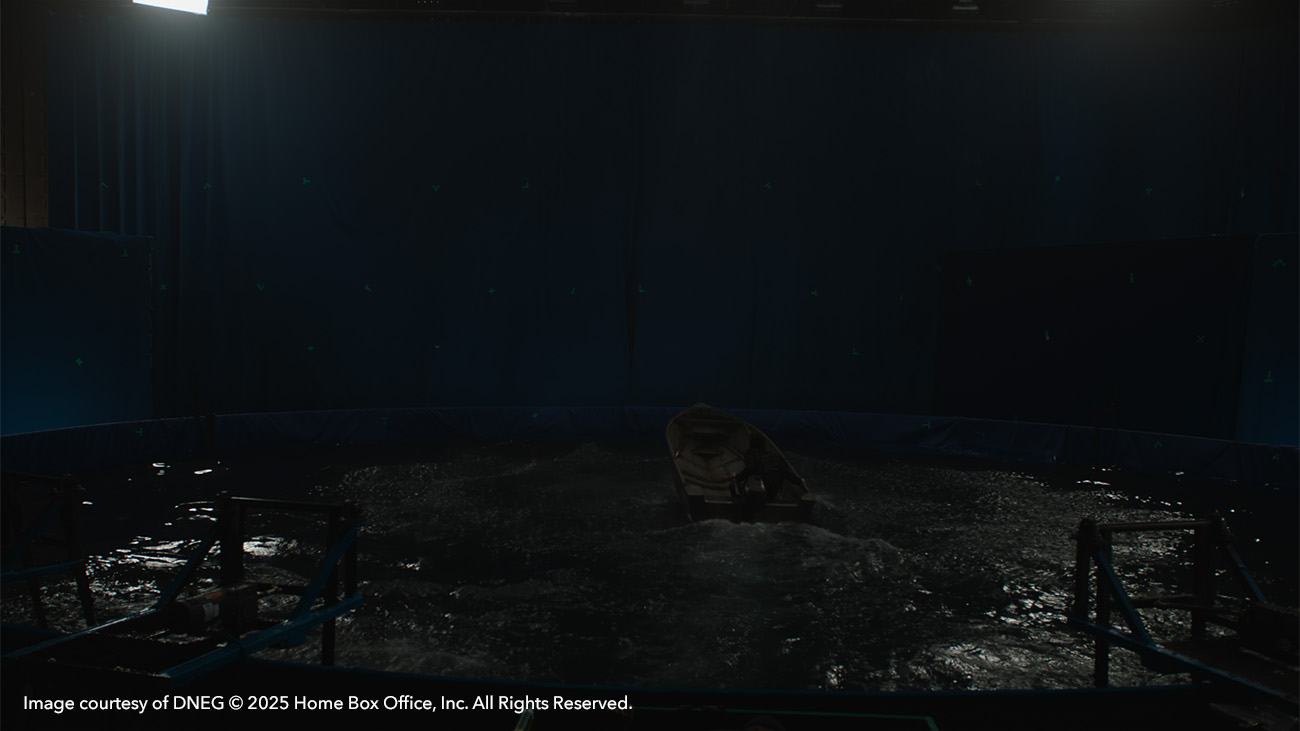
“We learned that by grading spray and water passes in a certain way, we could silhouette the actors to enhance their shape so that they would still be readable by the audience.”
Compositing the season finale boat scene
The boat itself was a practical prop, with some plates shot on gimbals, and some in a water tank. The storm intensified throughout the sequence, as Ellie’s desperation grew, with CG and FX matched to practical references from both the gimbal and water tank setups.
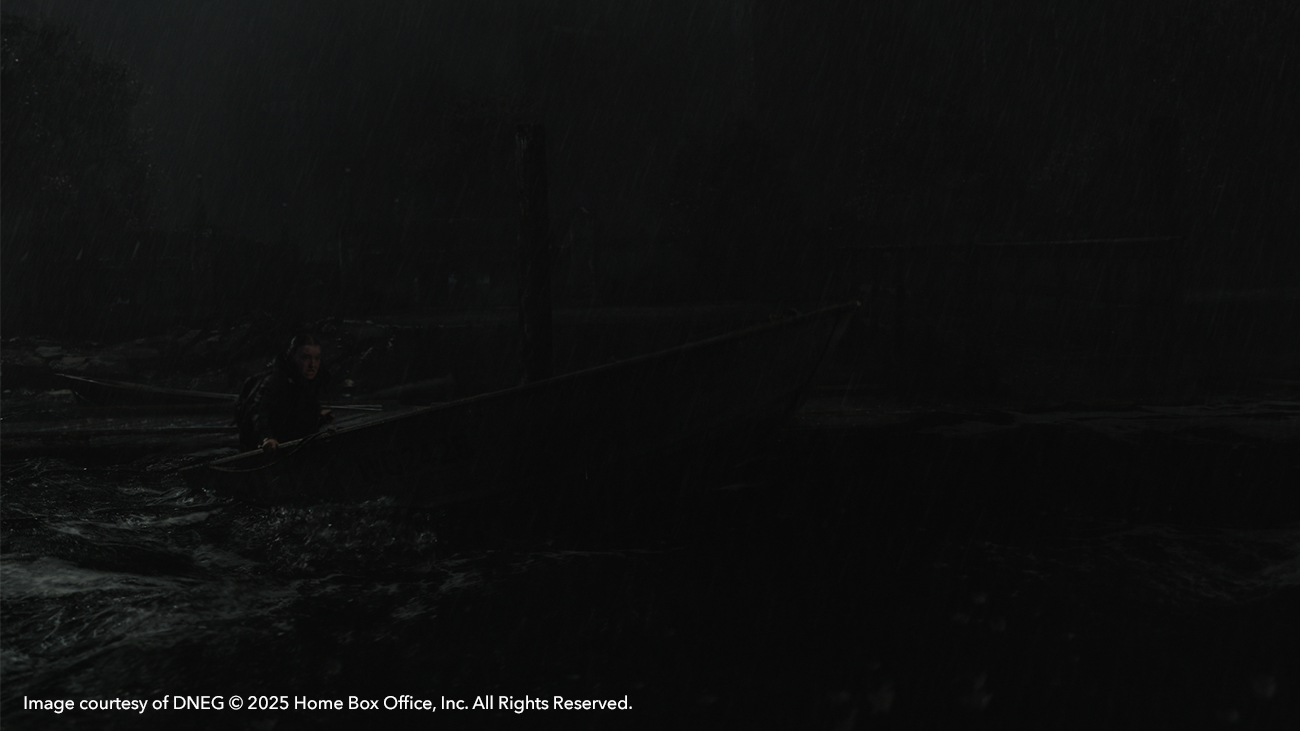
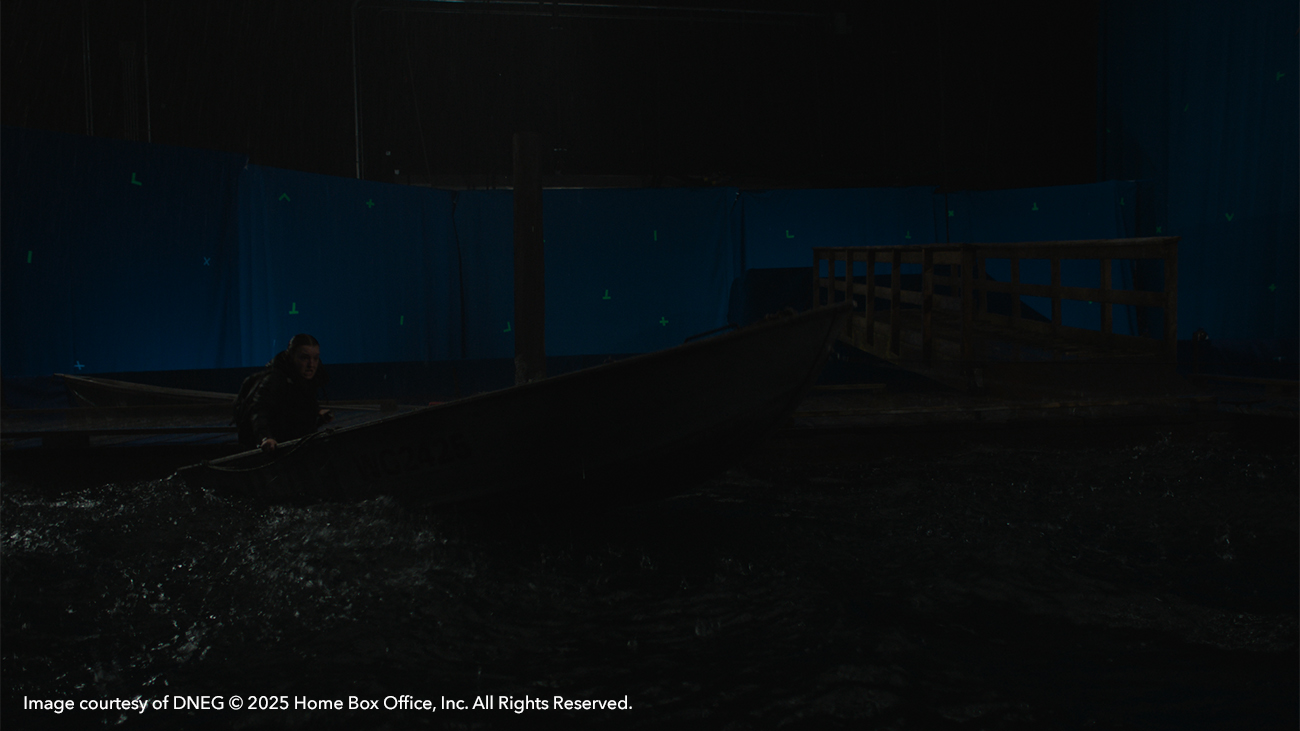
“Unlike the gimbal shots, the water tank gave us more of a starting point for how the water should be interacting” says Francesco. “Everything around the boat was created in CG, which we had to blend to the existing water around Ellie’s boat.
“Compositing was essential for handling all of the complex layering between water spray and atmospherics, giving our Nuke artists a significant amount of creative freedom. The horizon, sky, lightning and overall atmosphere, were all either created, or heavily enhanced, in comp. We were essentially rebuilding the environment around the actors.”
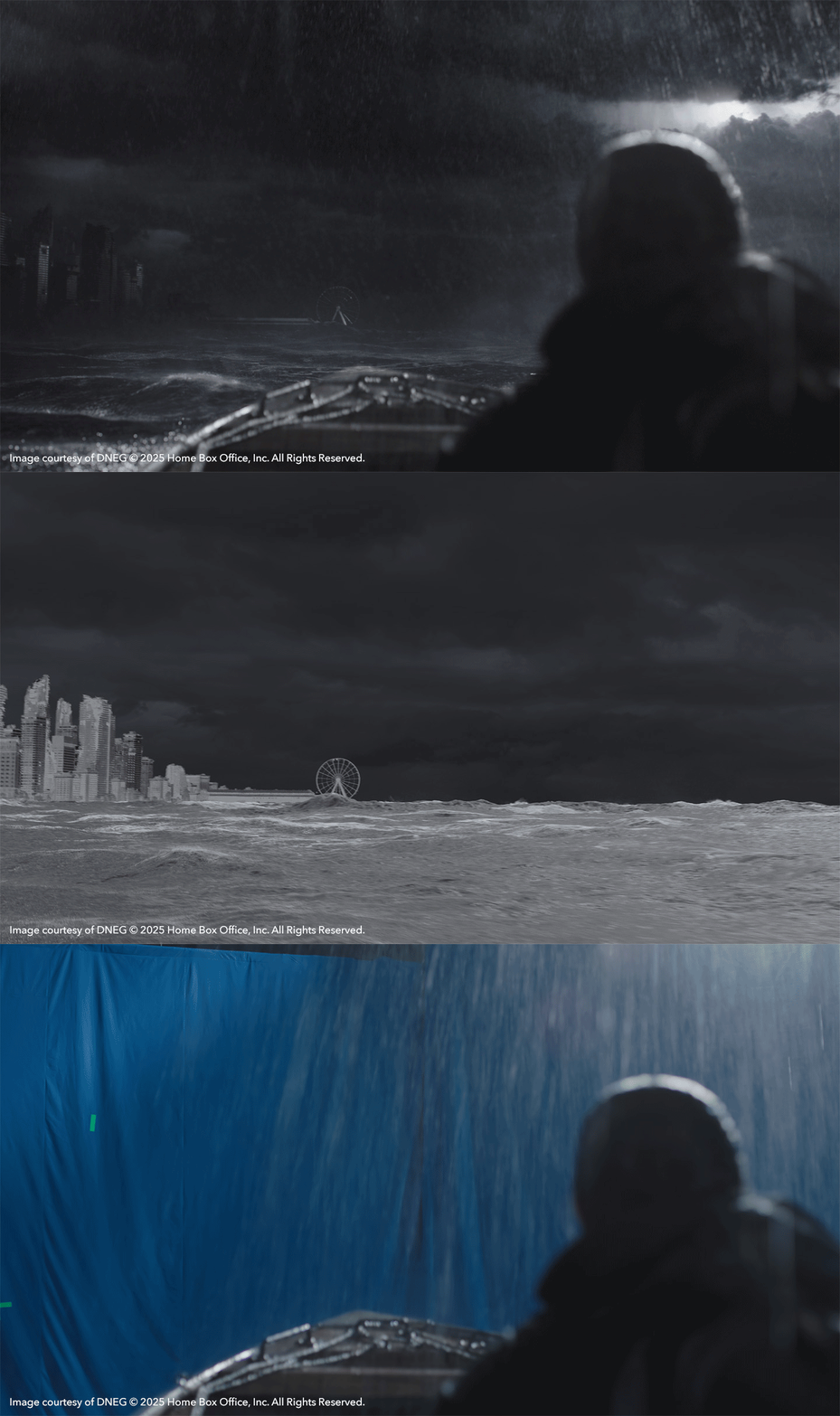
Giving 2D artists creative freedom
The team made extensive use of Nuke’s 3D system to enhance the CG passes, building simple geometry for the boat environment and then projecting the sky and storm elements, to provide realistic parallax and camera moves. They placed 2D effects cards, like spray rain sheets and mist, into the 3D space so that they interacted properly with the lighting and depth.
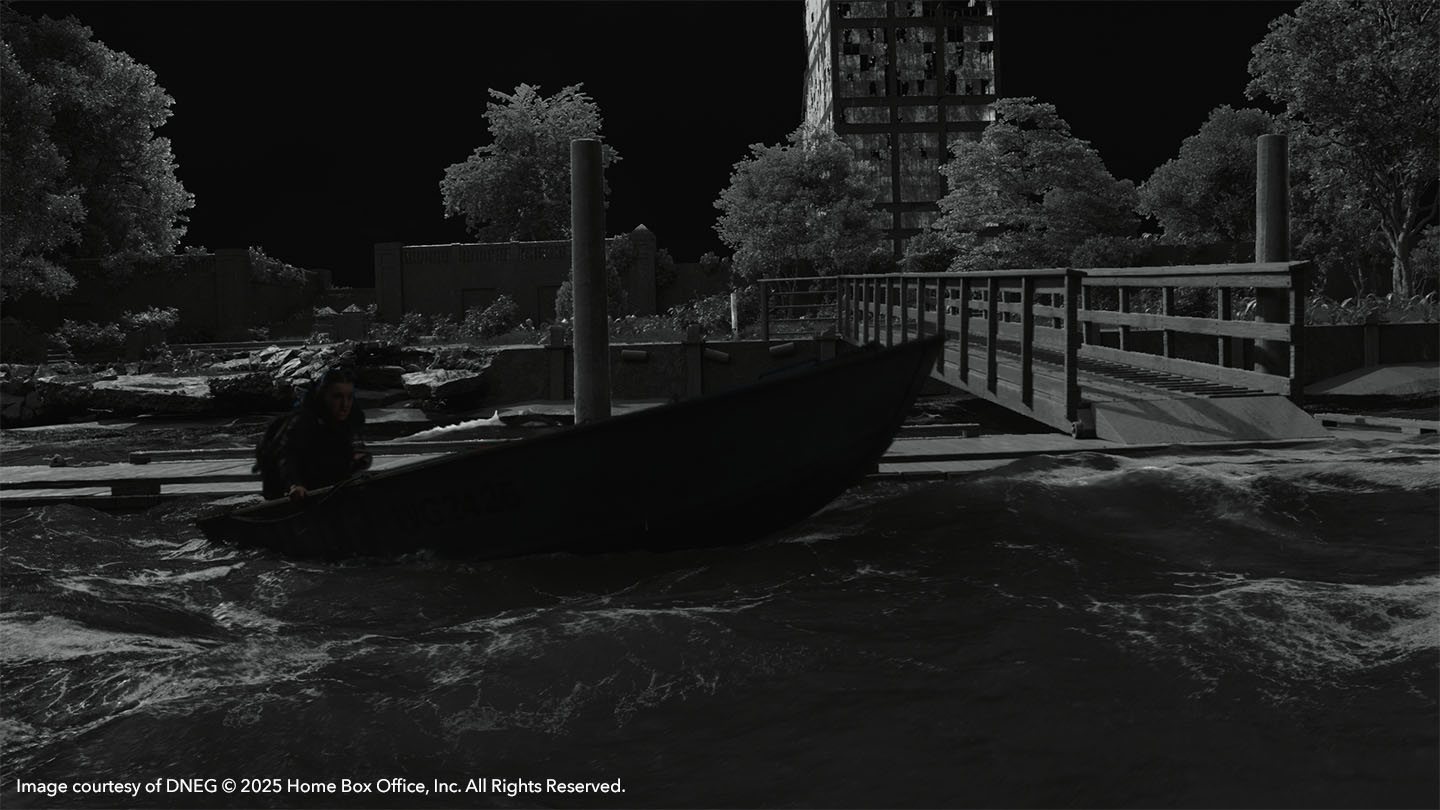
“This gave the compositors lots of creative freedom, without constantly having to return to the renders,” says Francesco. “Wherever we felt the shots could benefit from a bit of a 2D push, we had the 2D elements ready to elevate them.
“It was a fun sequence for the compositors to work on. With the ability to quickly iterate through a selection of passes, and show various examples, NukeX gave our compositors the flexibility to shape the mood and look of the shots, rather than just assembling passes.”
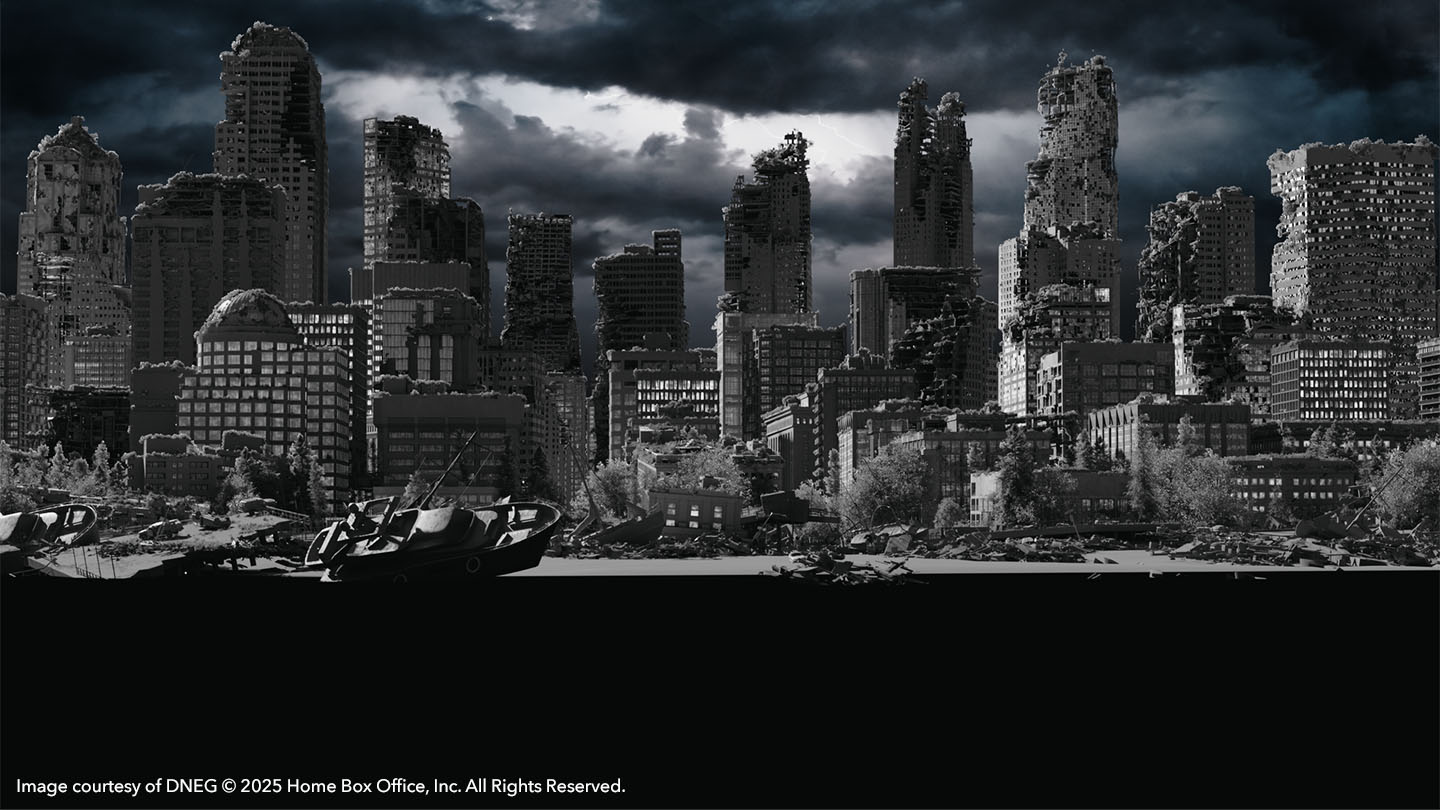
The team also used the Nuke Particle System to help build the scene, mostly for enhancing splashes around the boat. Nuke’s Deep Compositing, which uses additional depth data to produce a higher quality image with fewer artifacts, was also used widely across the show.
“The way Nuke handles deep compositing is flawless and I don't know how we could do without it,” says Francesco.
Building the finale’s lightning storm
Another complex challenge of the boat scene was the lightning storm, with flashes occasionally lighting up the shots. The team added this in compositing, using plates of practical on-set flashes, along with real lightning footage, and layering extensive FX to heighten the stormy atmosphere, making the shots feel dark, dangerous, and immersive.
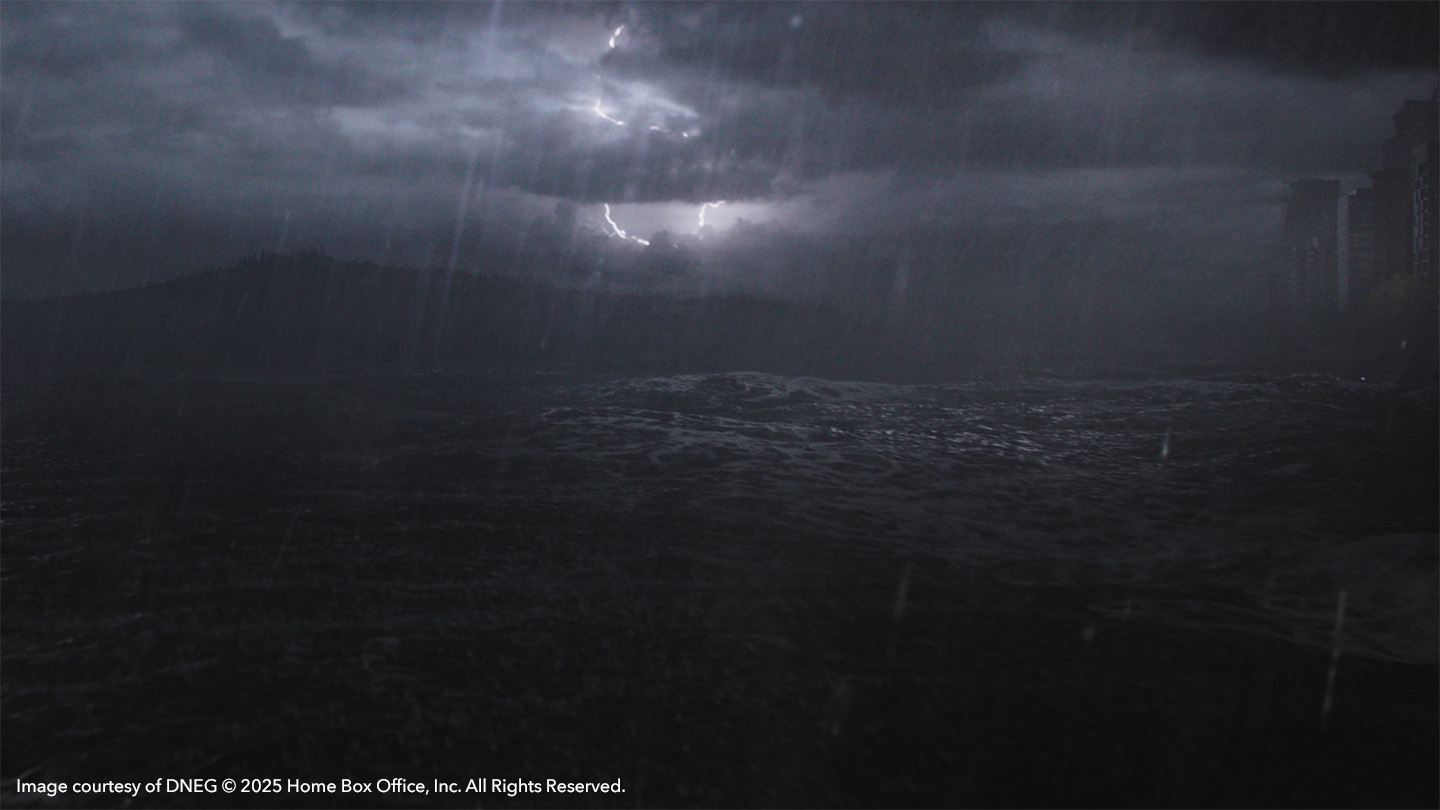
“Because we were using practical footage, we had to find the right timing to match the flashes on set,” says Francesco. “That took a bit of massaging, and retiming but the process became smoother as we went through the sequence”
“The workflow basically consisted of two stages. First, we added the lightning comp to line up with the onset flashes. And then once that was reviewed and approved by the VFX supervisor, we got the pre-comp of the sky with the lightning so we could illuminate the CG atmospherics and CG environments consistently.”
Saving time and money with Nuke’s CopyCat
The DNEG team also made use of Nuke’s CopyCat machine learning toolset on an earlier episode in the series. CopyCat is trained on the studio’s own source material, resulting in more reliable output, with no issues around copyright.
The scene takes place in a dilapidated music store, where Ellie plus best friend and love interest Dina take shelter. The on-set dressing included a substantial amount of flowers and vegetation. However, some of the flowers were deemed too big, so that they were drawing focus away from the characters. As a result, the client requested that they be removed.
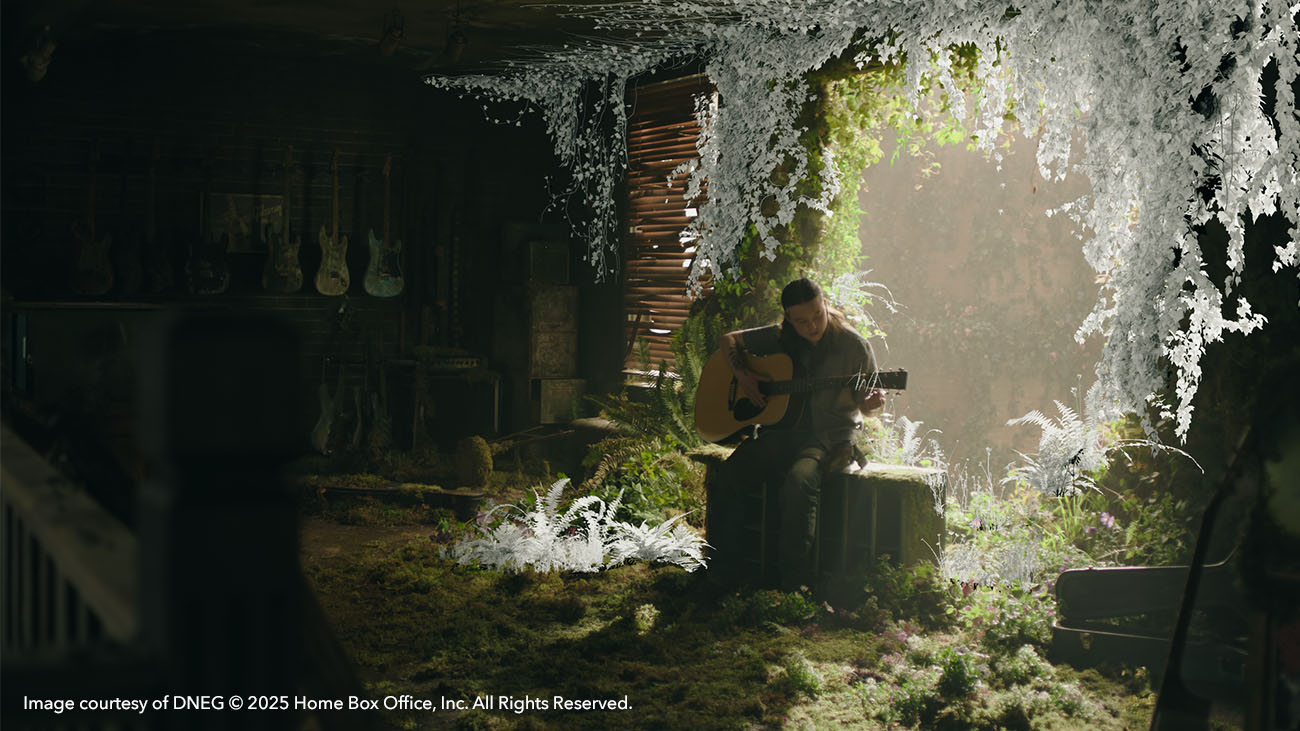
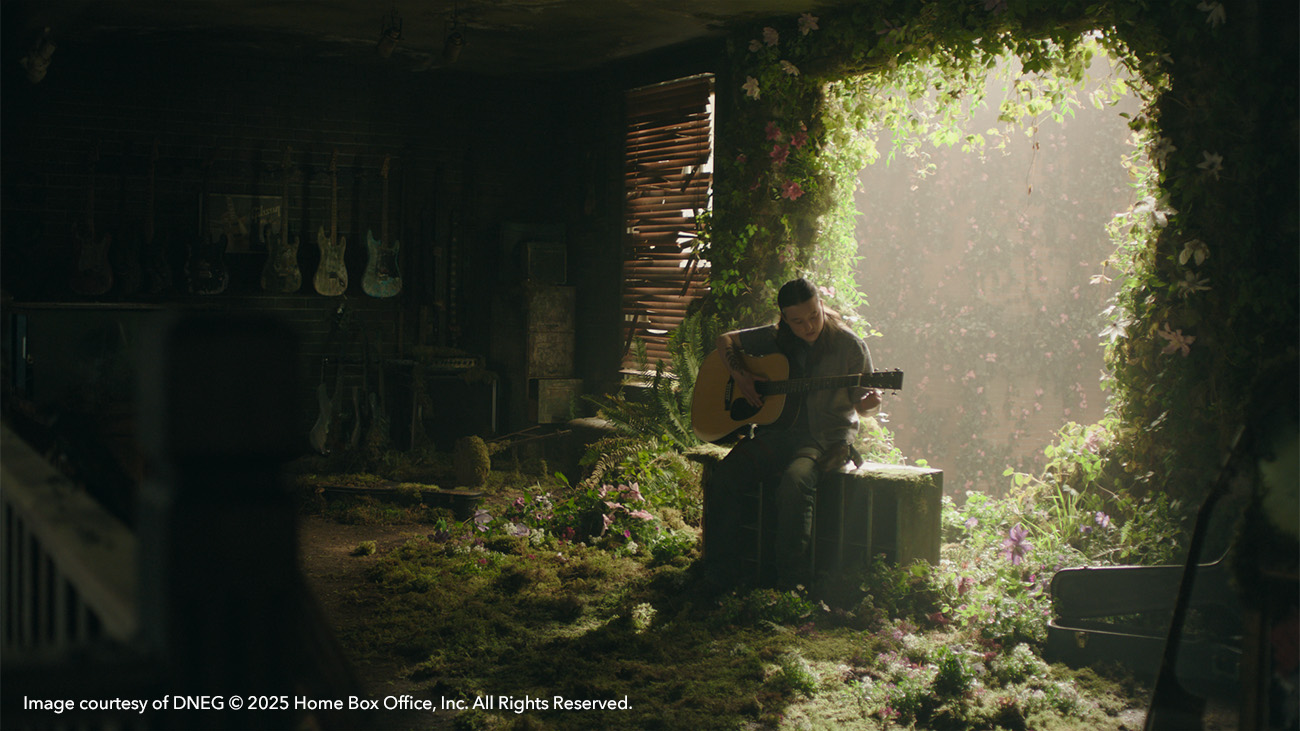
“This would have been a very expensive and time-consuming prep task,” says Francesco. “As the camera moves through the scene, there was a lot of parallax between the flowers and other vegetation, so it would have been very challenging.”
Instead, the team used CopyCat to recolor that particular flower throughout the scene, changing it from pink to green, to blend it in with the surrounding greenery. It took only around two days to train the CopyCat model, while it would have taken around a week to carry out the original prep work for a single shot.
“I was very shocked and pleased by the result,” says Francesco. “It was a nice way to find out how CopyCat can help our work in future.”
Check out DNEG’s The Last of Us S2 VFX breakdown:
Want to find out more about Nuke’s time-saving machine learning toolset? Sign up for our free CopyCat masterclass.
Find out how DNEG’s texturing team used Mari to bring post-apocalyptic Seattle to the screen in The Last of Us Season 2 using Mari.