How FOLKS created the invisible VFX for the hit Canadian series.
Heated Rivalry, the surprise breakaway hit from Canadian streaming platform Crave, has won fans around the world, especially for its representation and emotive storytelling. Based on the Game Changers series of novels by Rachel Reid, the gay ice hockey romance focuses on players from the fictional Major League Hockey (MLH) across a number of years.
We went behind the scenes with Simon Devault, VFX Supervisor, and Christophe Trépanier, Compositing Supervisor, to hear more about FOLKS’ work on the Heated Rivalry VFX and how Nuke helped them to bring key storytelling moments to life.
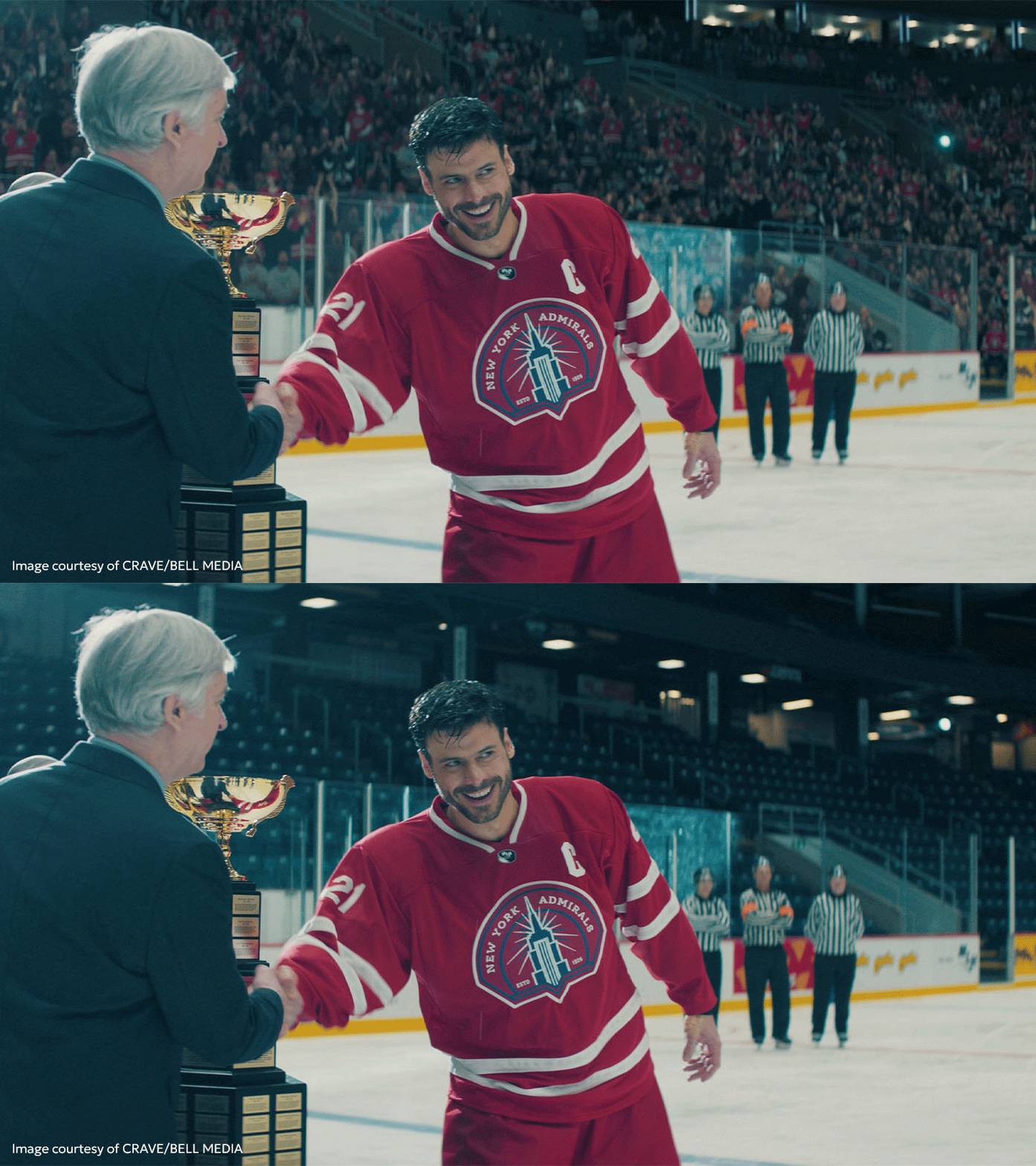
Founded in Montreal, with ten studios globally, FOLKS previously worked on the 2017 hockey comedy film Goon: Last of The Enforcers. This, along with the team’s own love of the game, meant they had a solid grounding for their work on Heated Rivalry. What’s more, they were able to apply the same technique for expanding hockey spectator scenes that they had used previously, though it has evolved over time, as the technology has improved.
Heated Rivalry VFX: Creating a fictional hockey league
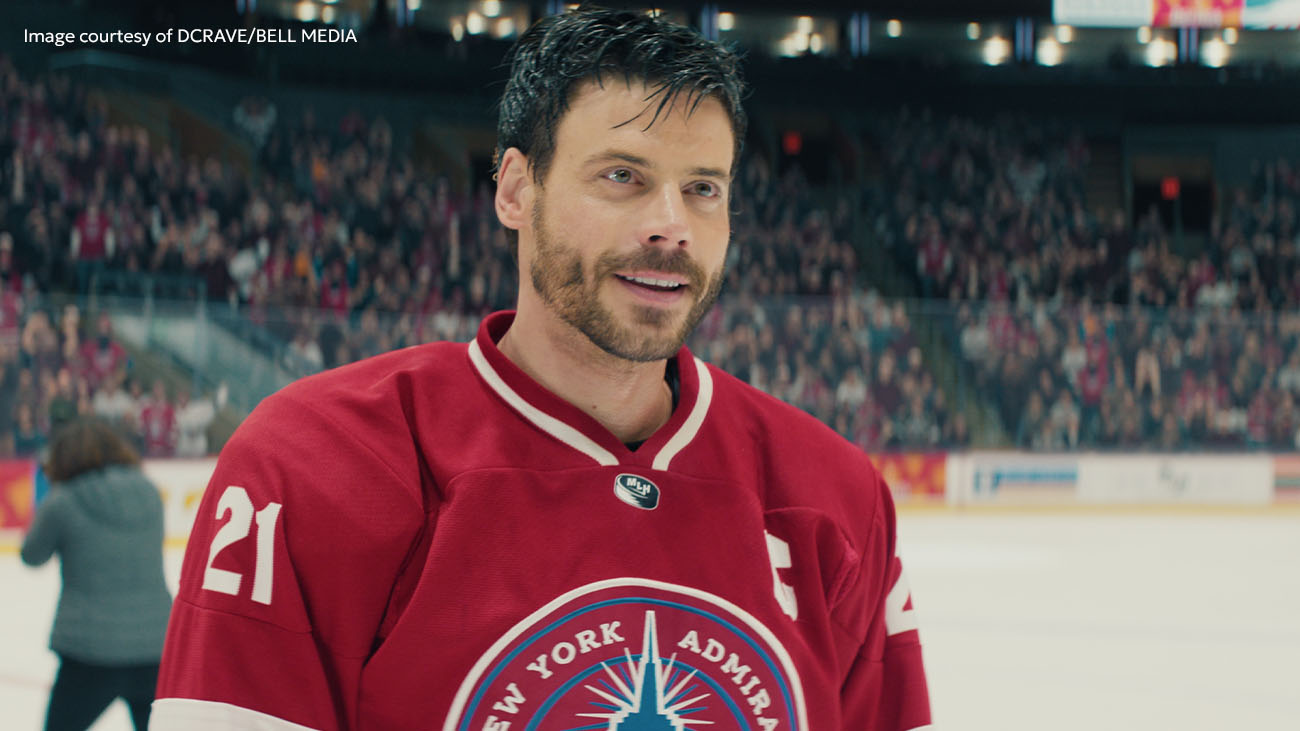
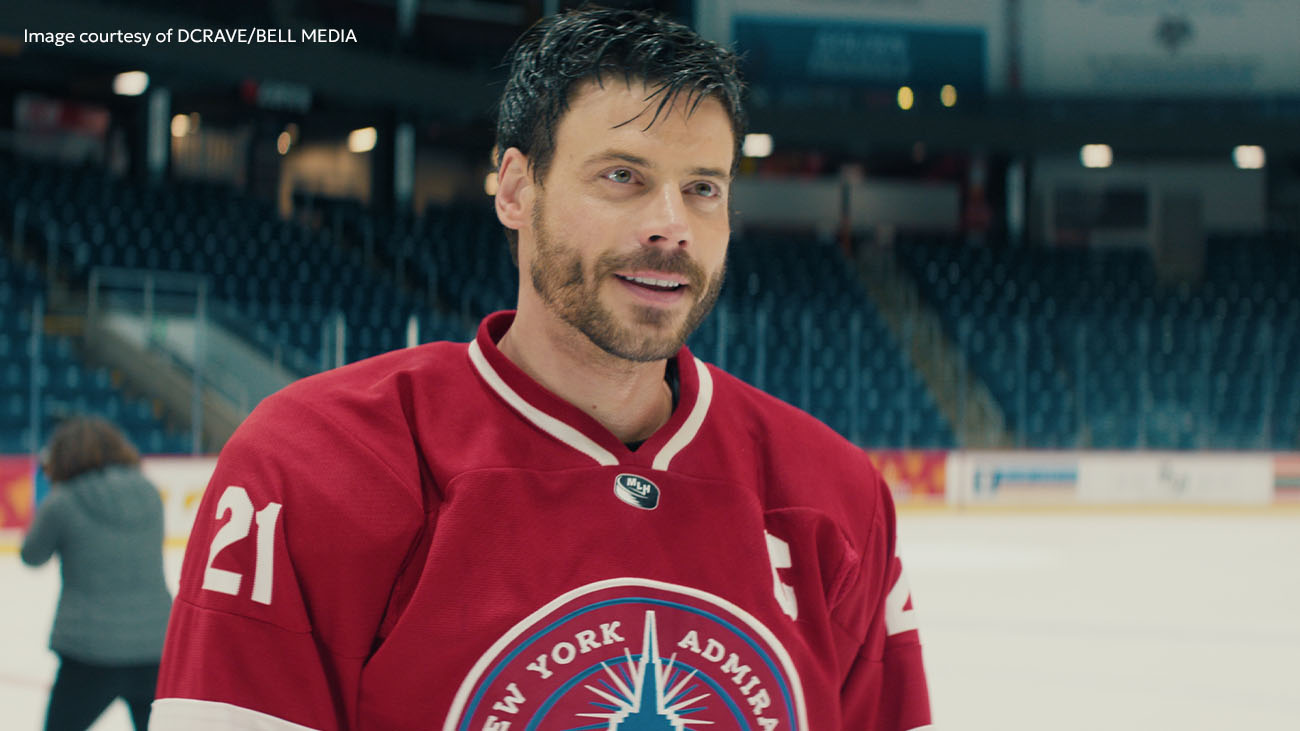
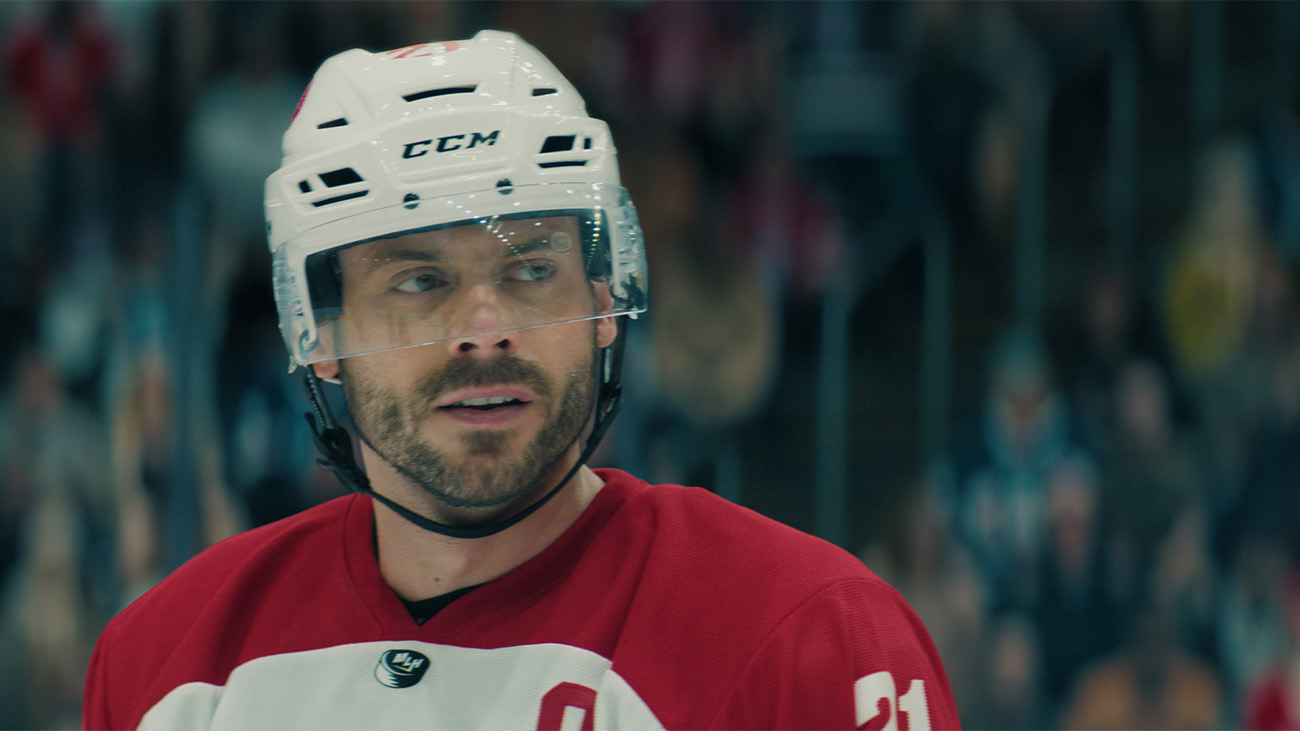
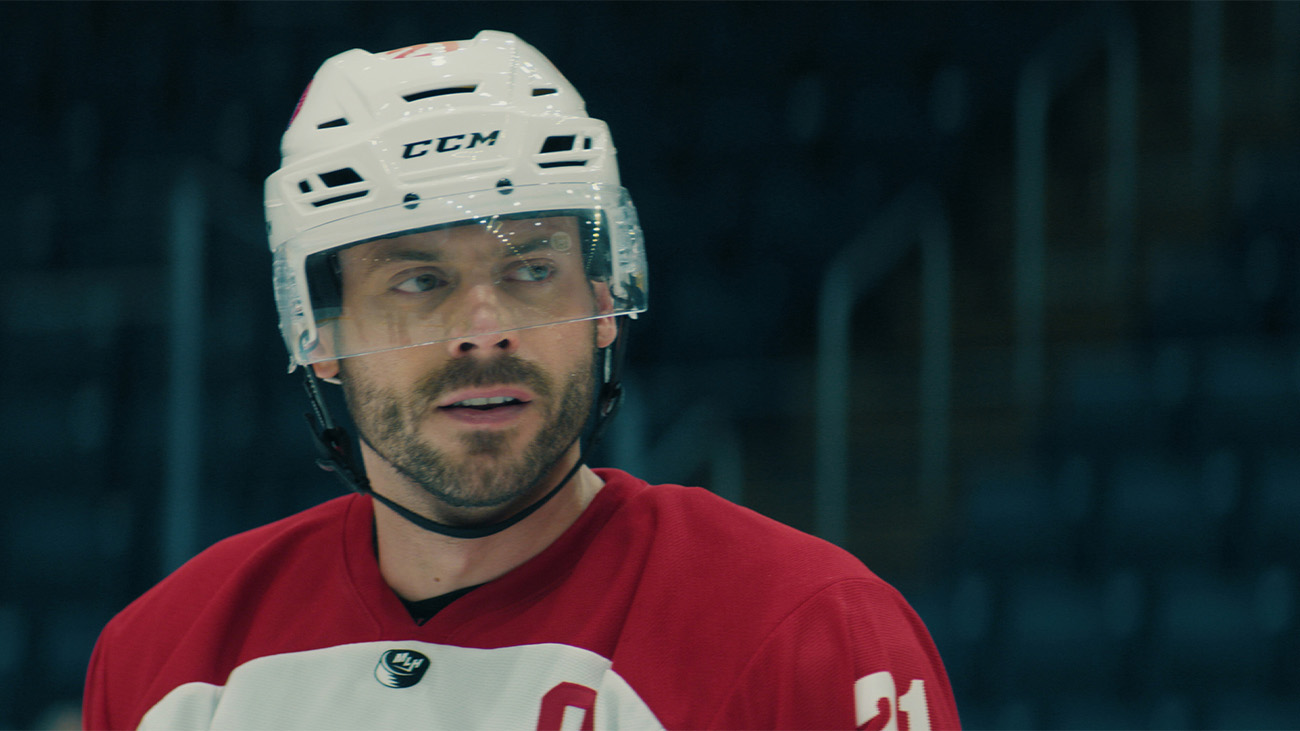
Working across 115 shots, FOLKS created set extensions and crowds for all of the show’s hockey sequences. The team received plates captured at a small arena in Ontario, and while they kept the front section of seating rows from each shot, they replaced everything from around 20 rows upwards. Approximately 50 extras were filmed for the plates, with the FOLKS team filming an additional 30 extras, including themselves, against a green screen to complete the scenes.
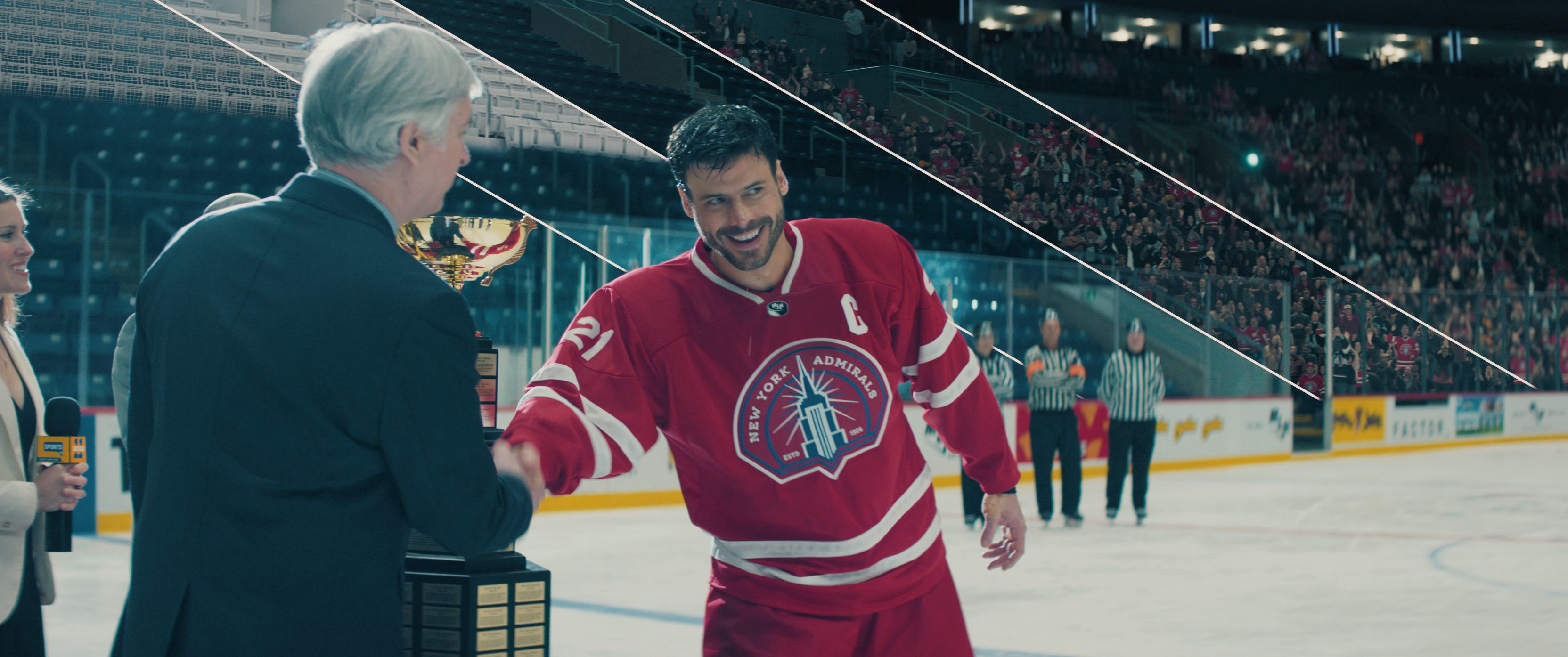
Simon Devault, VFX Supervisor at FOLKS, explains: “For the crowd, we did everything in compositing with NukeX. We used the Particle System to populate the seats, so that we didn’t have to manually add a person to each seat. Our CG team added locators on all the seats of the stadium, then we were able to emit one particle per seat.”
Christophe Trépanier, Compositing Supervisor at FOLKS, adds: “The Particle System gives us a lot of control on how to spread out the people. For crowd scenes, when you emit your particles, you get lots of duplicates sitting side by side. But with the IDs of the particles, we were able to swap out people rapidly in the simulation, without having to change everything else.”
Building an ice hockey crowd
While some crowd shots were supplied as plates, this proved limiting for dynamic camera moves or unusual angles, which is why the team filmed additional crowd members. And while it may be easier to create more variants with a CG crowd, it inevitably takes a lot longer to ensure that details are photoreal. That’s why FOLKS instead used their tried and tested method of shooting more people to add into the shots.
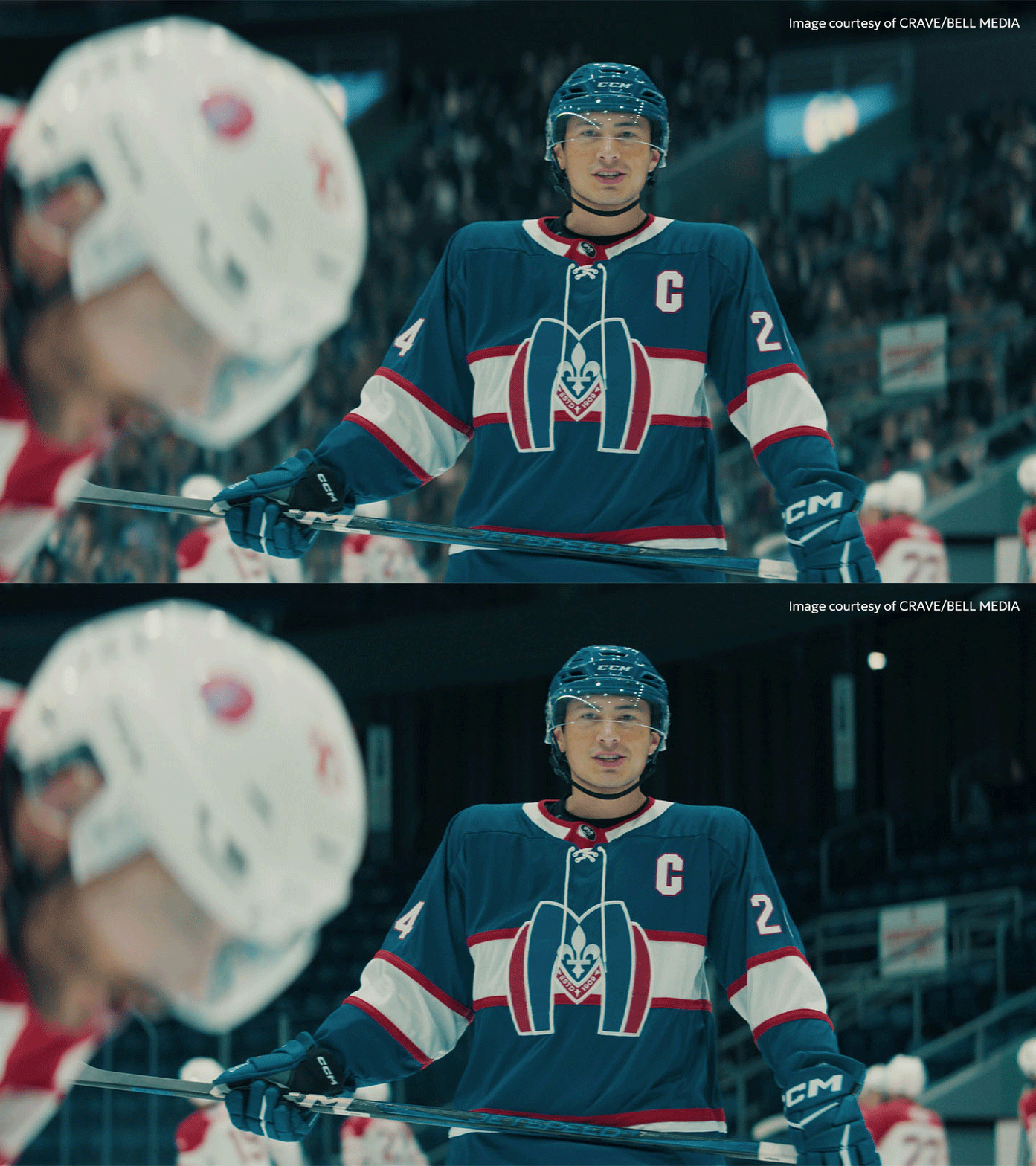
Using jerseys and hats in team colours supplied by the production department, the team shot extras in a range of specific angles, and showing different emotions. For example, when there’s a goal scored, the crowd had to be happy, when there’s a fight, they needed to be angry, and if their team conceded a goal they were sad. After categorizing each crowd member by team and emotion, the team created around 1,000 different sprites (2D images that always face the camera) to achieve these shots.
Making the angles work
In these kinds of hockey scenes, the action is usually between the camera and the crowd. This makes this particular setup really effective as the crowd is always looking towards the camera. However, when the crowd is in focus for longer, it becomes more difficult.
“It's easy to fill that stadium when there's a big camera movement,” says Christophe. “You don't notice all the duplicates. But as soon as it's a static camera, and it's a long shot, you really need to fill in all that space, and swap out any duplicates, which makes those shots more challenging.”
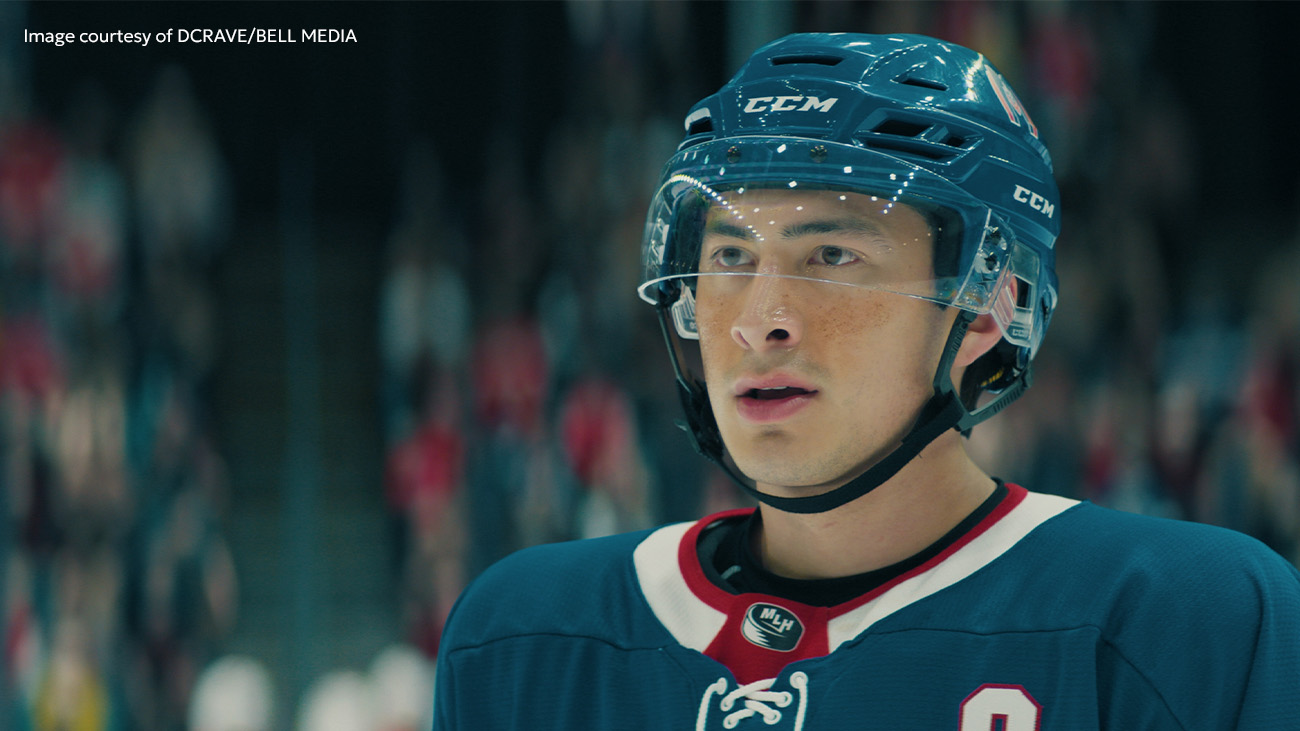
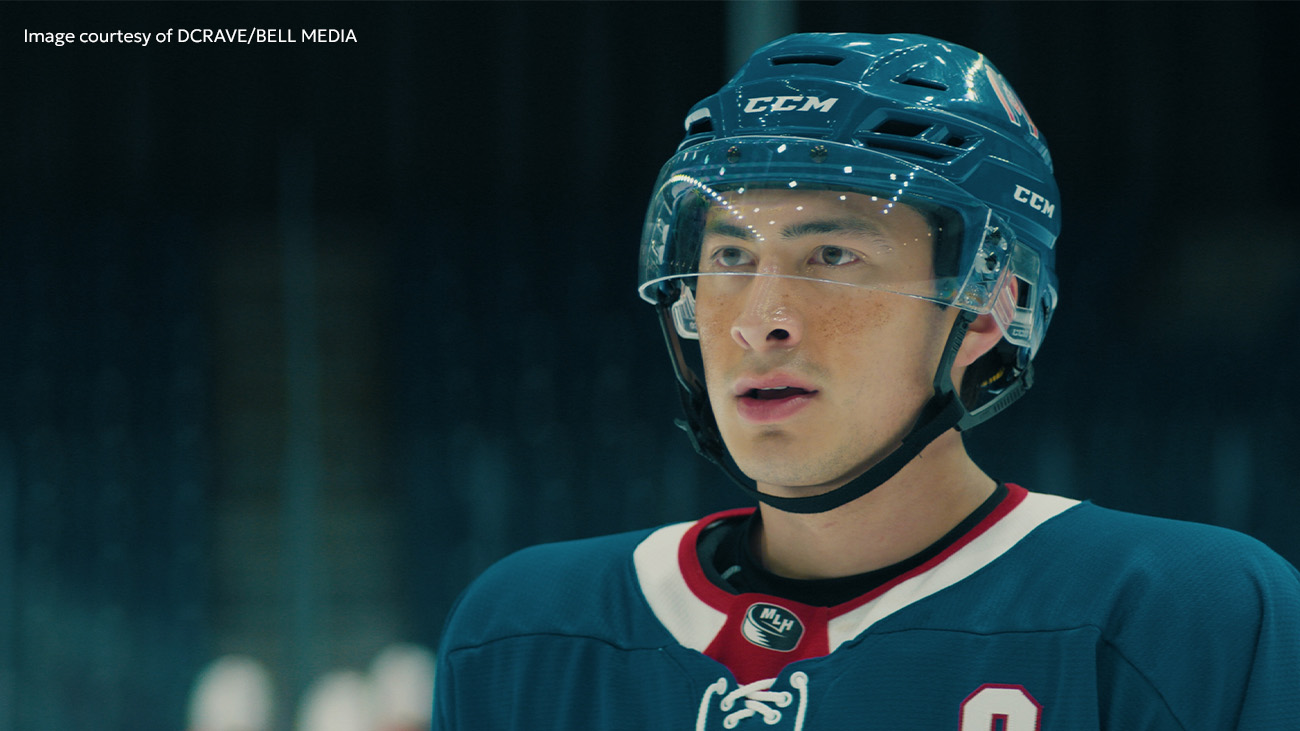
Any time that the action was not between the camera and the crowd, the team needed to shoot new, specific elements. The ‘broadcast’ angle was especially tricky, with the camera up high looking down on the action, while the crowd were looking down at the ice. This meant they needed new shots of people from behind and from the side, but looking downwards.
“We looked at broadcast footage of key real-world games to see, for example, how tightly people are supposed to be packed together,” says Christophe.
Heated Rivalry VFX: machine learning with Nuke
To turn the plates sourced from one small location into multiple different venues, the team took references from real-life National Hockey League (NHL) arenas. For the fictitious Montreal Metros’ home ice, the team added more LED lights, inspired by the city’s Bell Centre stadium. And for the New York Admirals’ arena, the location of one of the series’ most crucial scenes, the team looked at the older architecture and wooden paneling from the Big Apple’s Madison Square Garden.
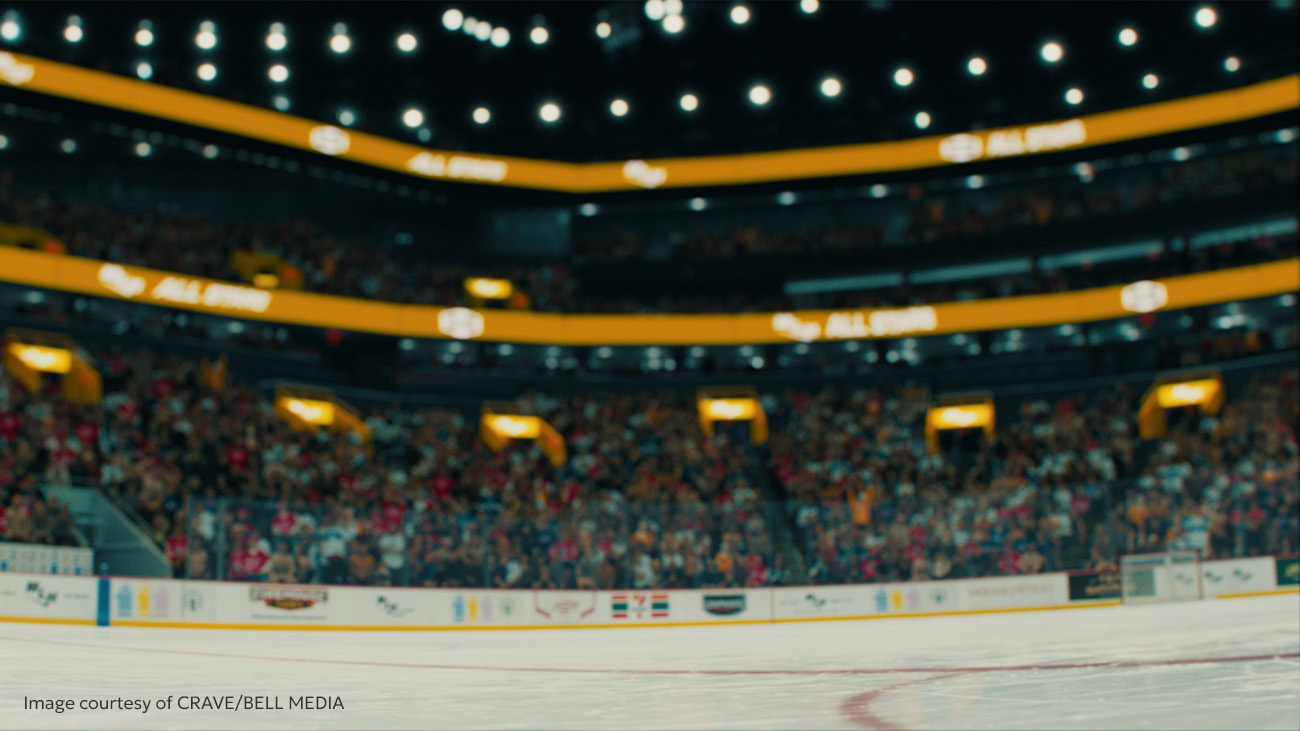
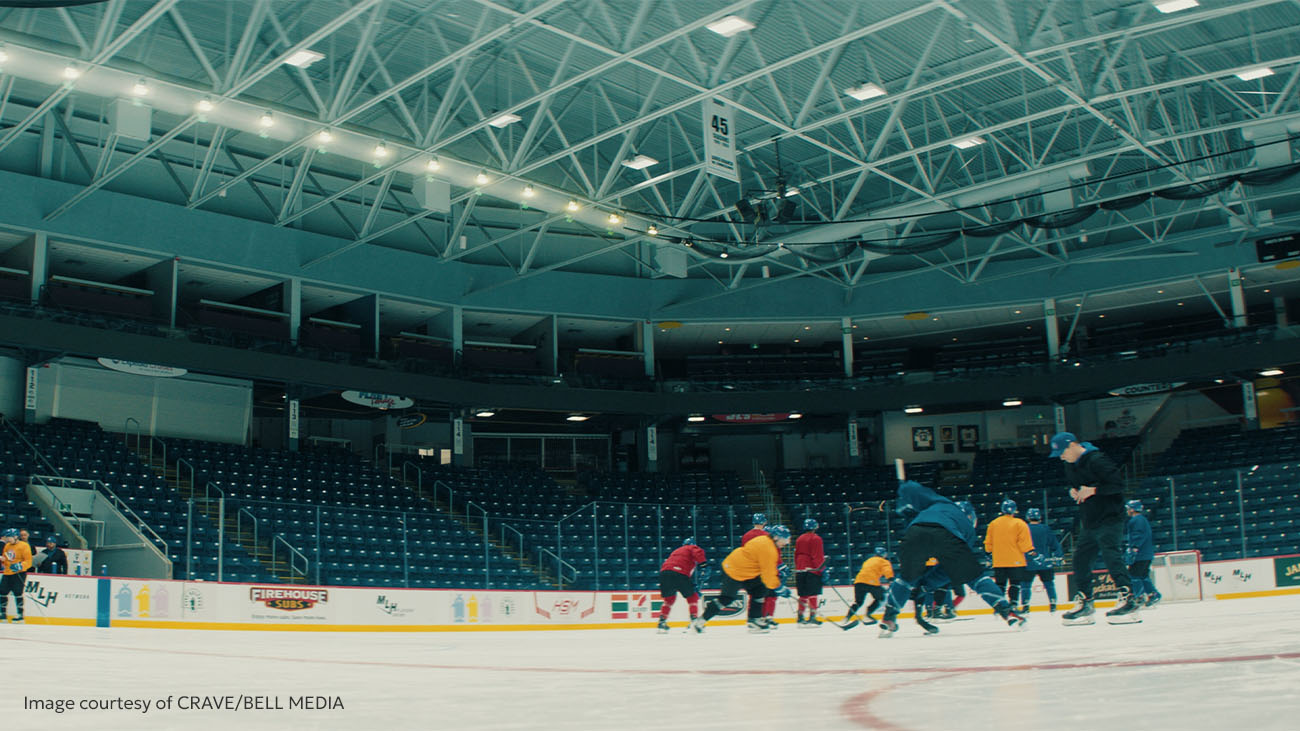
To recreate the stadiums’ top-down lighting, extras were filmed with relatively flat lights. “When we needed to tweak the lighting, we used some Cattery elements to add UVs to each of our sprites that we shot,” says Simon. “With those UVs, we were able to relight each character slightly, to match them more to the scene. We also used the Cattery to help smooth out the motion on our crowd, as many of the shots in the show are in slow motion.”
Outside of the hockey scenes, FOLKS also made use of CopyCat, Nuke’s machine learning toolset, on one additional shot for tattoo removal on one of the actors.
Creating a key scene in comp
For one of the show’s most powerful scenes, where two characters kiss on the ice in front of the hockey crowd, the invisible VFX was a crucial part of the storytelling. The team knew straightaway that this sequence was a key moment where the emotion needed to shine through, and it has since earned widespread praise for its LGBTQ+ representation and as a potentially game-changing moment for professional sport.
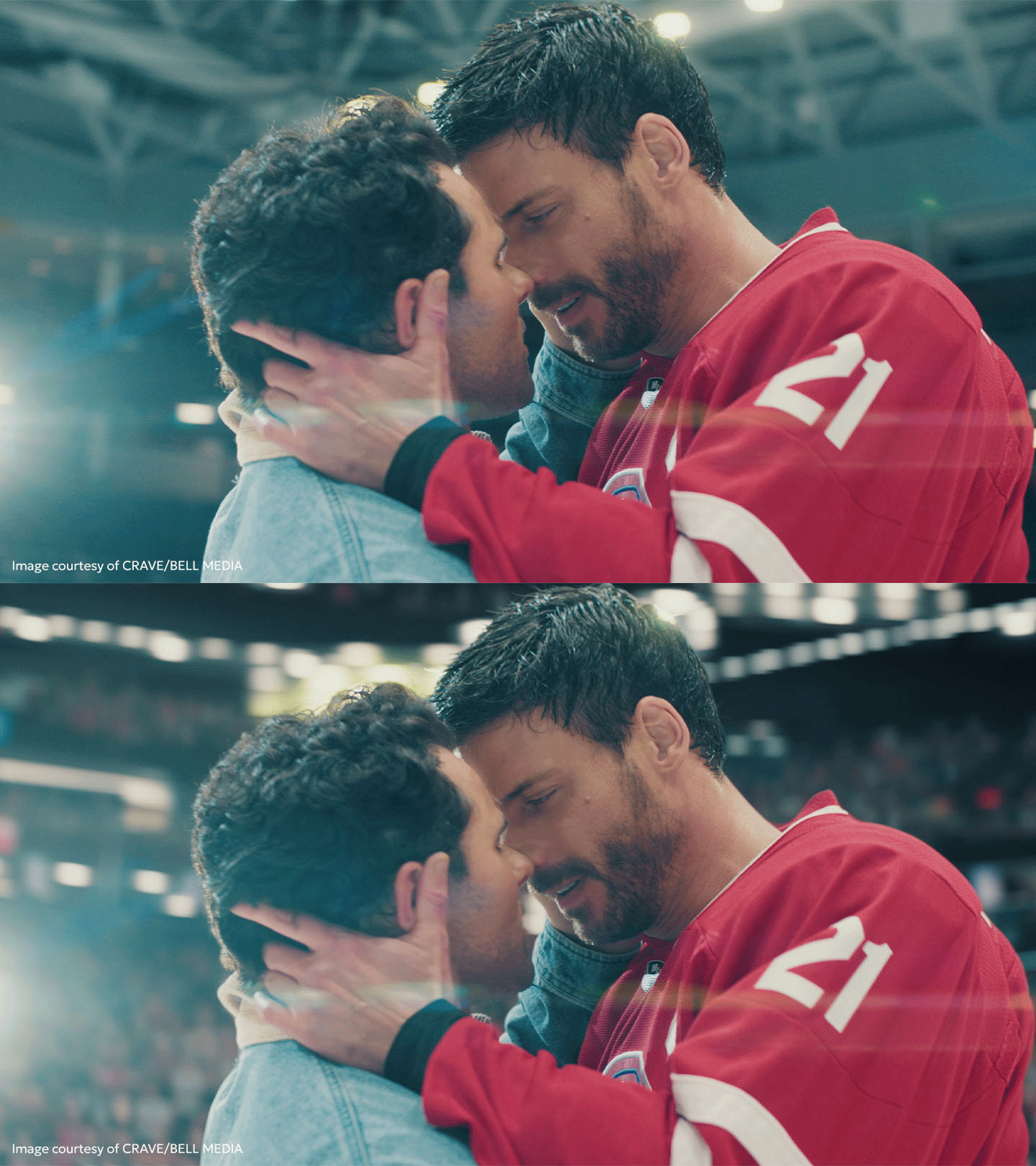
“When you look at the original plates of that kiss, it's two guys in the empty, small arena with the camera turning around,” explains Simon. “It's like two different worlds when you see the final result. By adding the set extension and making the scene really wide and epic, and adding all those people, plus a lot of lens flare, it helped to make it even more beautiful. The VFX really helped tell the story.”
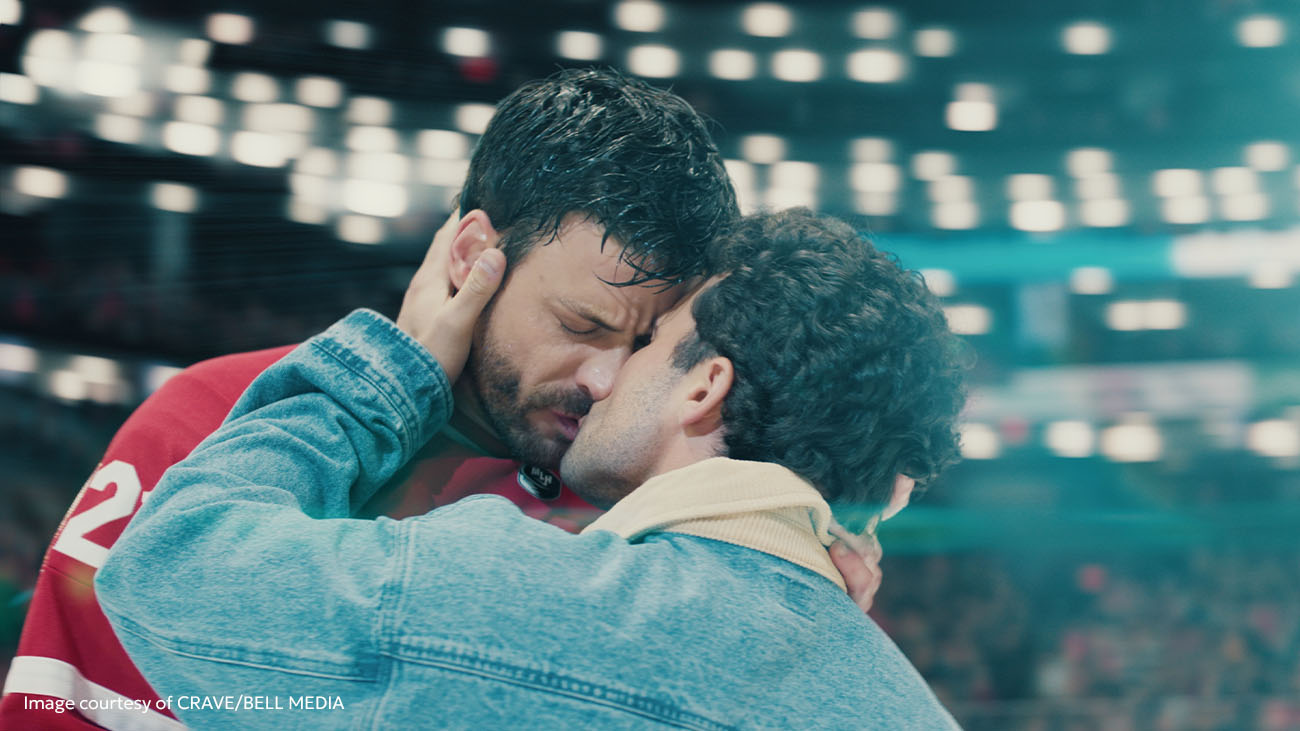
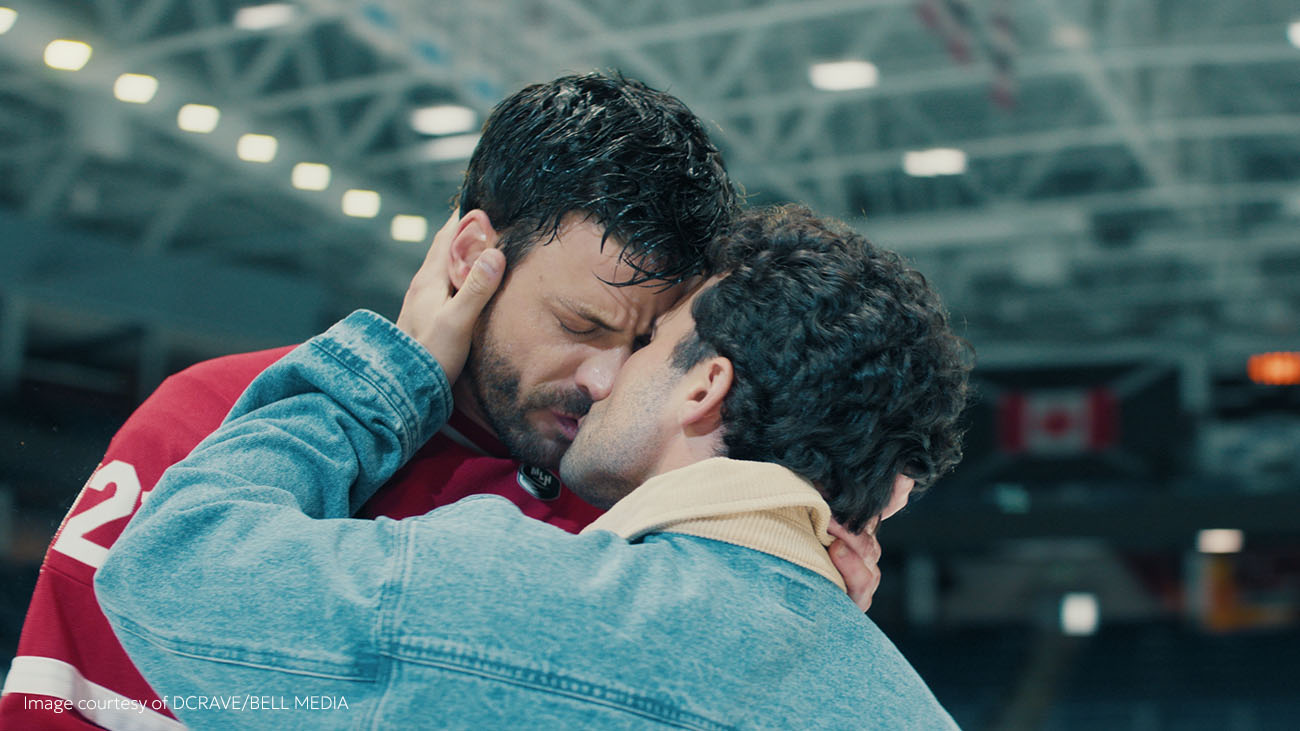
When the studio shared their breakdown reel from the show, the response from the Heated Rivalry’s dedicated fanbase was incredibly positive.
“The good thing is that nobody noticed that it was VFX,” says Simon.
Fast iteration for comp artists
With only 8–10 artists working on the project, along with a compressed schedule, efficiency was a key concern for FOLKS. They were able to scale up the capability of the team using multiple Nuke setups, enabling each artist to work across a larger number of shots. The team worked hard on getting these setups in place at the start so that they were ready to get started as soon as the plates arrived.
“We were really able to focus on the creative part more than the technical part, because the technical side was mostly already done,” says Christophe.
To cope with the heavy data management required for the show, the team used various optimization tricks, including lots of batch processing, to streamline the workflow.
“For example, we applied sprites on contact sheets, rendering multiple sprites onto one image,” says Christophe. “That meant the network didn't have to fetch 50 different images, we could just get one image, and from that we got multiple sprites.”
“Nuke was really the main tool in that show,” says Simon. “And our comp artists had total control over what was happening in the crowd scenes. In a traditional CG world, any changes would need to go back to CG, we’d need to render the light, then send it back to the compositor, but because it was completely in the compositors’ hands, it was really quick.”
To find out more about how particles in Nuke can help with photorealistic, immersive storytelling, watch our tutorial: Creating fire with particles.
Check out FOLKS’ Heated Rivalry VFX breakdown video: