Multishot compositing: Variable-enabled workflows in Nuke
By Ben Dair, Senior Director of Product - VFX and Animation, Foundry
Best VFX Oscar winner James Cameron’s Avatar: Fire and Ash was brought to life with 3,132 visual effects (VFX) shots, and only seven seconds of the 197-minute movie were untouched by VFX. Expansive digital work and sizable VFX shot counts like this have become the norm. Artists are increasingly feeling the crunch to do more and faster with substantially fewer resources. At the same time, studio pressure to elevate visuals is mounting, yet budgets and timelines are tighter than ever. That’s where tools like Variable-enabled multishot compositing workflows in Nuke can help.
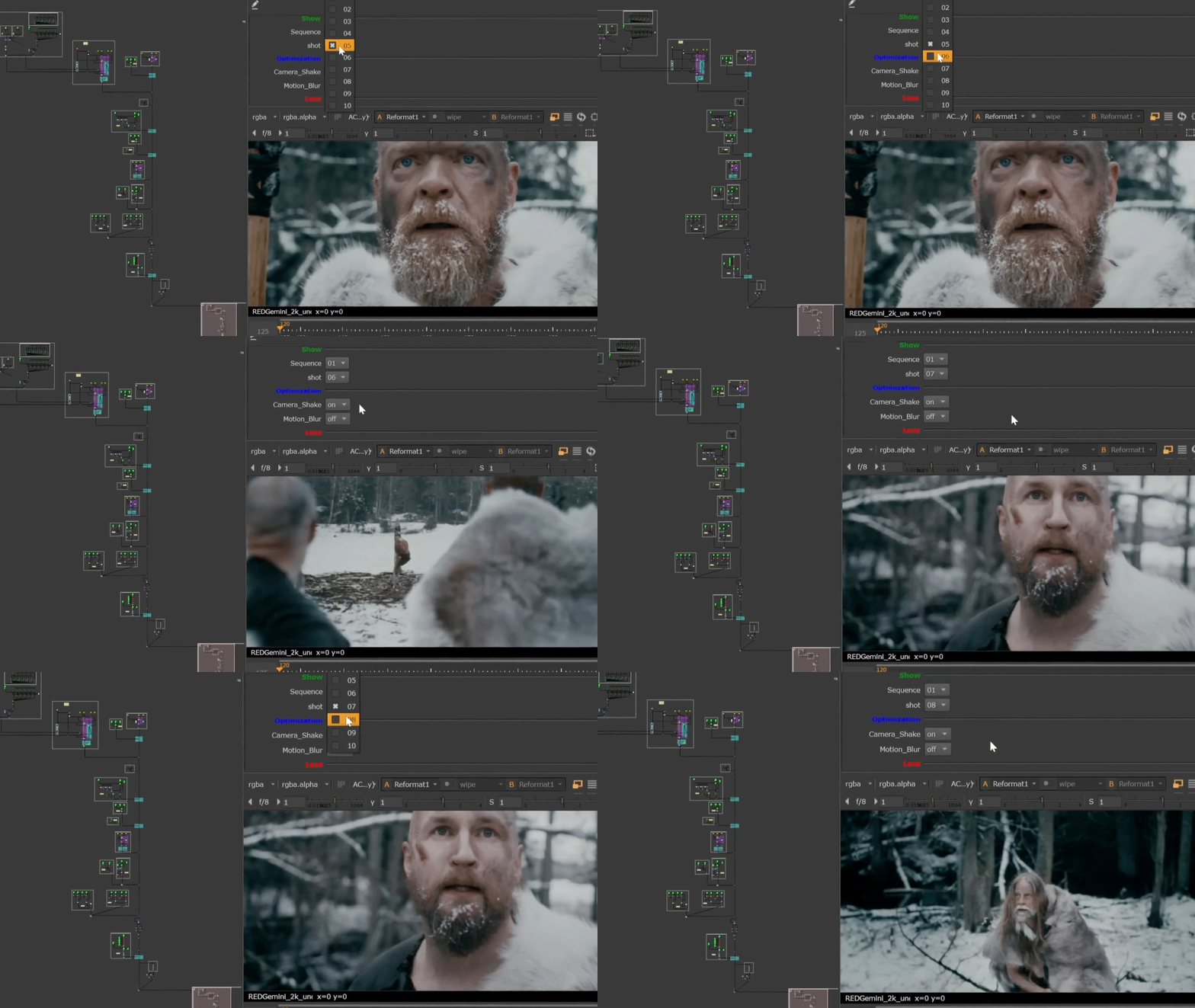
Variable-enabled workflows allow artists to store aspects of shots as a value that can be applied across sequences, or entire shows, instead of hard-coded into assets. While many industry-standard digital content creation applications now support Variable-enabled workflows, compositing has historically required a more manual approach. Recognizing its importance, Foundry incorporated native support for a Variable-enabled approach into Nuke. Now compositors can more easily tap into multishot workflows to reduce repetitive tasks and spend more time on impactful parts of a project, while improving shot consistency.
Bringing native Variable-enabled multishot workflows to Nuke
Built to handle massive scale, Nuke has a long legacy as a go-to VFX solution, and Foundry has continually upgraded the toolset since first bringing it to market in 2007. Reimagining Nuke for modern VFX with tools that support multishot compositing required a sophisticated user design upgrade, so that artists could easily visualize and understand the shot hierarchy.
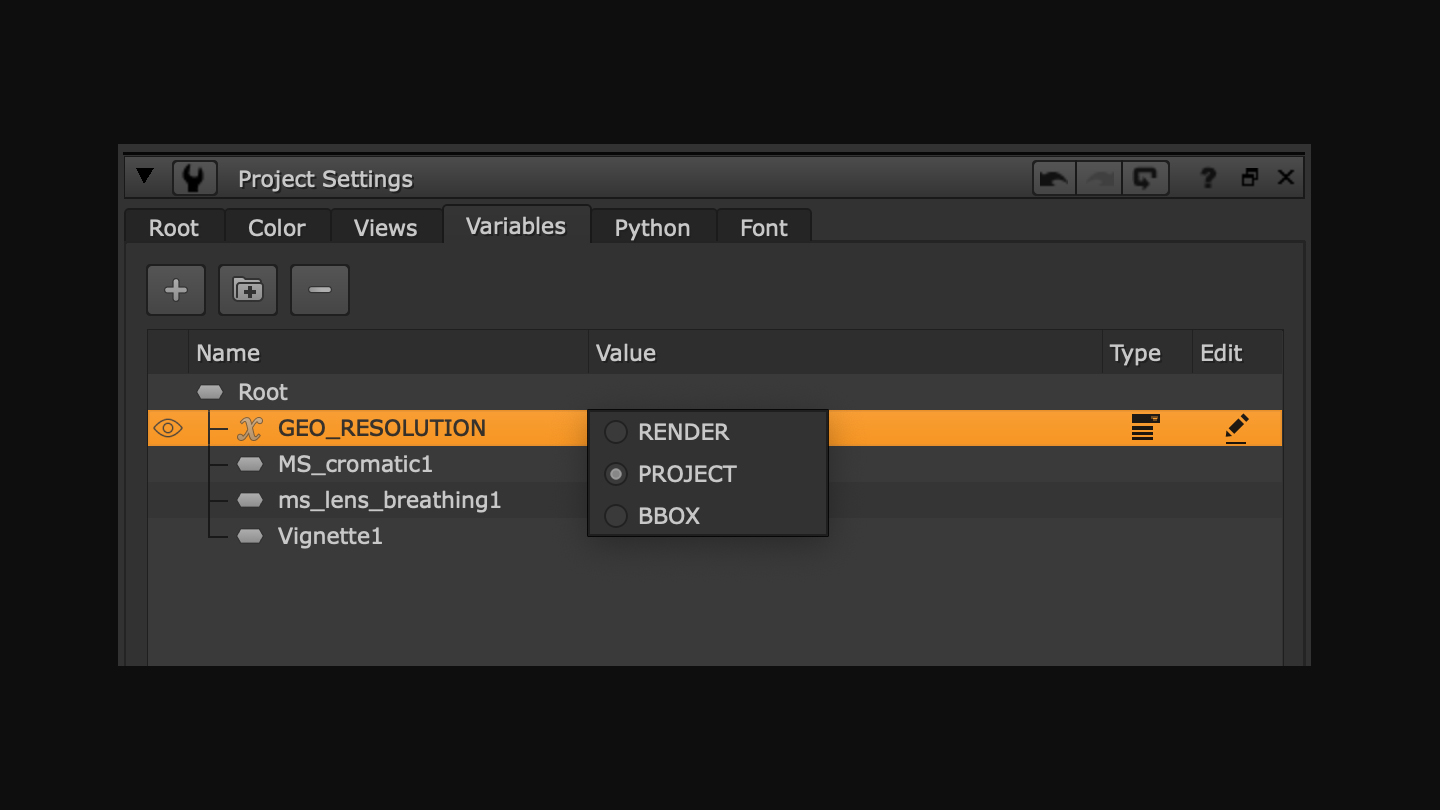
Graph Scope Variables are the foundation of Nuke’s multishot compositing workflows and the system that lets artists manage high volumes of shots. They make it easier to activate effects when rendering, manage different formats in advertising for different markets, or apply a Variable across multiple shots in a feature-length film. An intuitive interface panel provides a convenient way to expose a tailored list of Variables for setting up a multishot sequence.
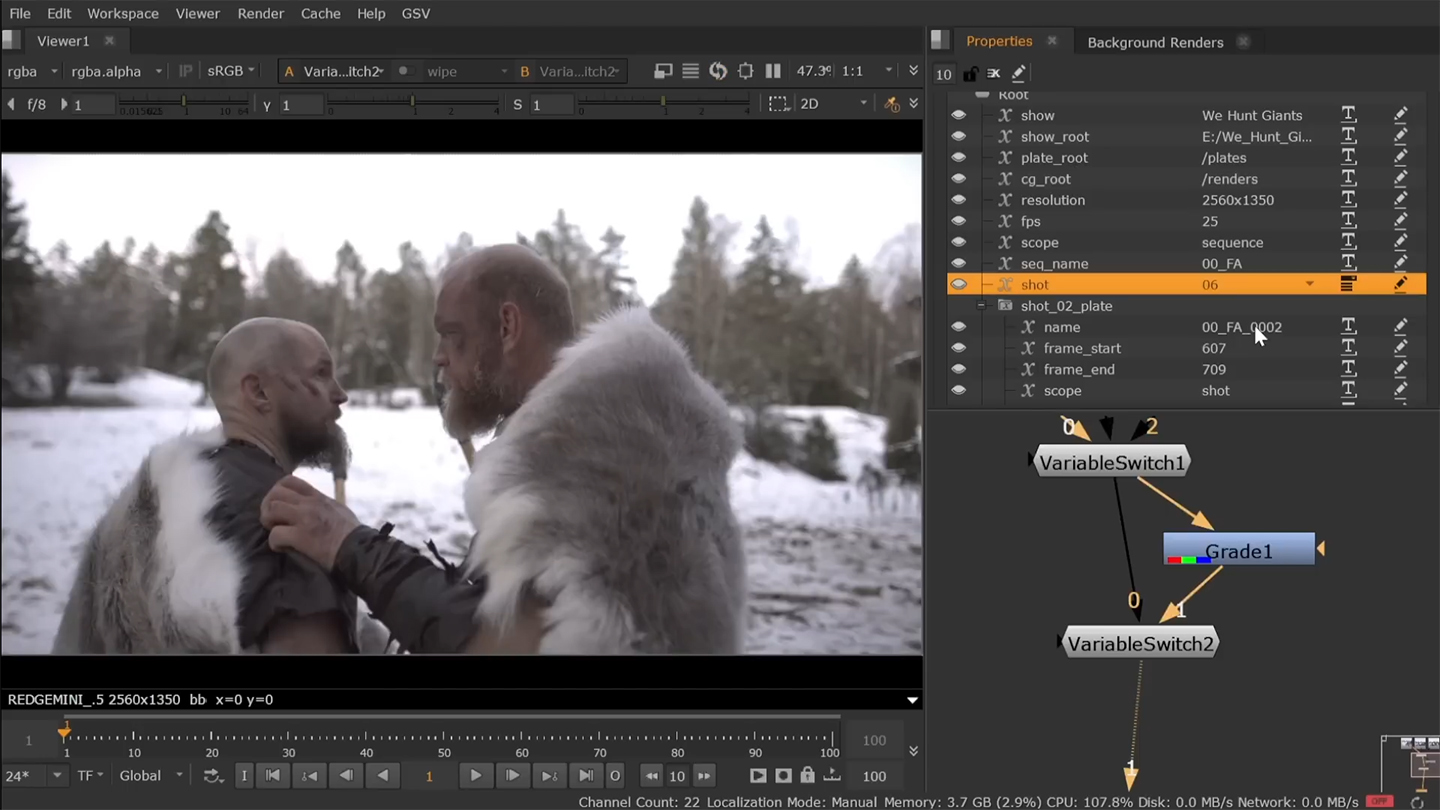
Artists can define, store, and access data from multiple contexts or ‘scopes’ within a single script with Nuke’s Graph Scope Variables. This eliminates the need for separate scripts for each variation and offers a more efficient and scalable approach. These Variables provide the flexibility to work at scale and speed up laborious workflows, all preserving project continuity.
For episodic series, where deadlines can be much shorter, a multishot workflow helps turn around hundreds of VFX shots much faster, even within smaller teams. In the context of a typical animated feature, changes for as many as half the shots could be applied automatically, so that artists could spend more time fine-tuning.
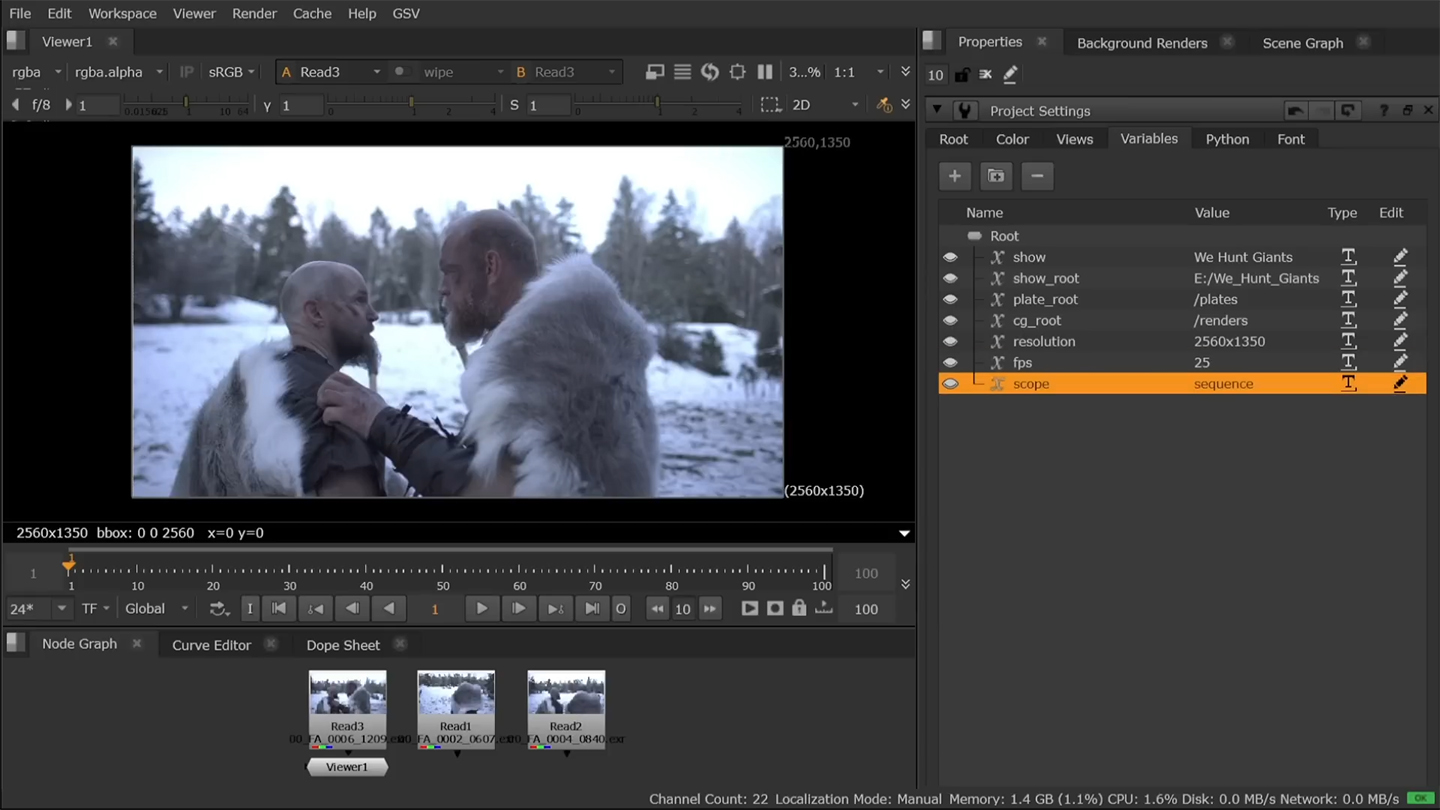
Nuke multishot in action
Skydance Animation is one of the first studios to use Nuke’s multishot capabilities in production, while creating the Netflix animated feature Spellbound.
“Multishot brought us a lot of efficiency because it enabled us to handle more than one shot with the same script,” explains Compositing Supervisor Alberto Juarez. “We could also preserve the data feedback on the applied changes so that we could maintain consistency across a group of shots.”
The approach also allowed Skydance compositors to switch between shots without opening a new script, keeping them more immersed in the creative flow. At the same time, they could implement changes to multiple shots in one go without repeating what they’d already done.
To achieve the best results with a multishot approach, Juarez emphasizes the importance of source consistency. “You need to have the same layer breakdown in all the shots that are shared on a script, so preparation is key,” he explains. “There are definitely aspects to keep in mind when thinking about considering a multishot approach, but for us, it was exactly what we wanted and a worthwhile effort.”
Tracking the next evolution
Multishot workflows empower artists to be more efficient and creative in nearly all aspects of content production. It’s an important capability for the continued advancement of VFX workflows, which is why Foundry focuses on natively supporting Variables in Nuke.
Check out our tutorials to learn more about using multishot compositing workflows in Nuke.